From the Media

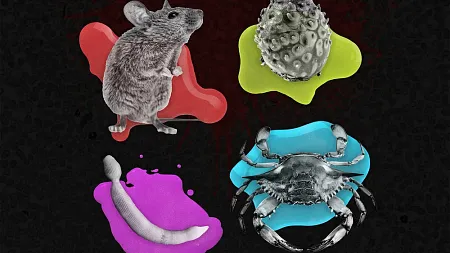
The Bloody Palette of the Animal Kingdom Goes Far Beyond Red
Humans are used to seeing red in blood — but red blood isn't universal in the animal kingdom. For some creatures, this vital fluid is purple; in others it’s yellow, green or even white. Smithsonian Magazine spoke with John Postlethwait, a developmental geneticist in the Department of Biology about Antarctic blackfin icefish of the family Channichthyida, the only known vertebrates that don’t make hemoglobin and do not have red blood cells. Their blood is a milky, translucent white. “They really are kind of ghostly," he said.
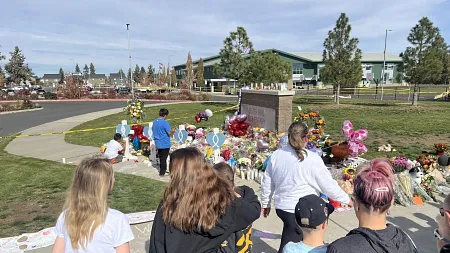
Bend’s Silver Rail Shooter Was Chronically Absent. Then He Disappeared.
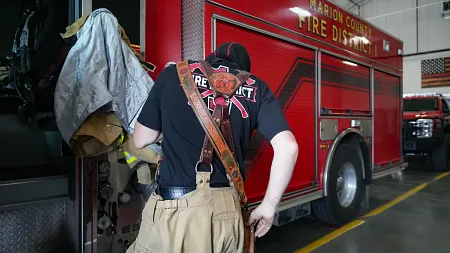
Nearly two weeks after the Oct. 15 shooting at a Bend-La Pine school, the shooter's absentee status from school raises questions about who should step in when kids don’t go to school and whether there are enough tools to pull them back to class. “There’s pretty strong evidence that rather than serving a deterring effect for these kids, justice system involvement is actually a promoter of delinquency,” CAS sociologist Stephanie Wiley told Bend Source Weekly.
In a post-CAHOOTS Eugene, peer navigators connect vulnerable people to services
Eugene’s long-running mobile crisis service, CAHOOTS, shut down in the city more than a year-and-a-half ago. KLCC spoke with Rori Rohlfs, CAS data scientist and co-author of recent research about CAHOOTS. The nature of calls for welfare response changed and law enforcement responses changed, Rohlfs said. “After CAHOOTS stopped service, the arrest rate for those calls has doubled,” Rohlfs said.
From Mormonism to Ms. Magazine
College of Arts and Sciences history PhD student Genevieve Bonner Davis writes in Ms. Magazine about her experience as a former devout Mormon housewife. Bonner Davis writes the essay as more women are being encouraged to adopt the tradwife lifestyle by federal government lawmakers. A tradwife is a repackaged, buzzy word to describe “traditional” women who intentionally forgo career and educational opportunities in order to stay at home to take care of their children and husbands within a heterosexual marriage.
Fear fuels Oregon’s race for governor. This city shows why
The Oregonian/OregonLive digs into the data on the Oregon gubernatorial race and spoke with political science assistant professor Chandler James. While uneasiness can motivate voters, James said voter apathy also can make it difficult for campaigns to boost turnout, which could play a pivotal role in this year’s race. “If that’s the game, then the person who taps into the greatest anxieties is going to win,” James said. “Whatever Oregonians are most fearful of will be the thing that drives the outcome of the election.”
Radio Waves Coming From an Alien Planet May Be a Cosmic First
PHYSICS - College of Arts and Sciences astronomer Yvette Cendes spoke with the New York Times about a recent paper she authored that documented waves coming from what seems to be an aurora at the poles of Beta Pictoris b, a planet that circles a star more than 63 light-years from Earth.
The devastating Nepal floods highlighted the danger of glaciers. Here's where the next disaster may occur.
The glacial collapse that killed 1,400 people in Nepal in August highlighted one epicenter for such disasters — but there are other hotspots that experts are worried about. Live Science spoke with Mark Carey, a professor of environmental studies and geography, about glacial-related natural disasters. "Slope failure from glacier shrinkage is occurring everywhere."
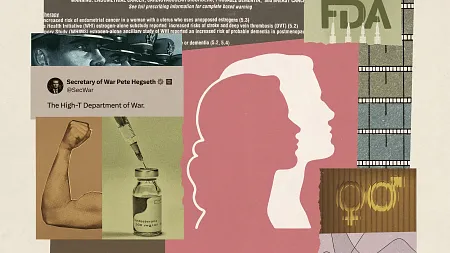
It’s a transformative moment for hormones. And kind of a weird one.
Expanding access to testosterone for men's libido is ultimately about defining manhood, said Alison Gash, professor and chair of political science at the College of Arts and Sciences, who studies gender and LGBTQ+ issues. "If you are a desexualized man, then you're deviating from the expectations that make you valued according to your gender, especially in this administration," Gash told the media organization The 19th News Network.
We tested how AI chatbots would handle foreign propaganda. They did surprisingly well
An NPR deep dive on the potential government interference in AI chatbots references research by College of Arts and Sciences sociologist Hannah Waight. Waight, an assistant professor, and her co-author found the Chinese government's grip over the media seems to have given it some influence over LLM responses in Chinese. Waight's research was published in Nature.
The warming climate is forcing marathons to consider changes to keep runners cool
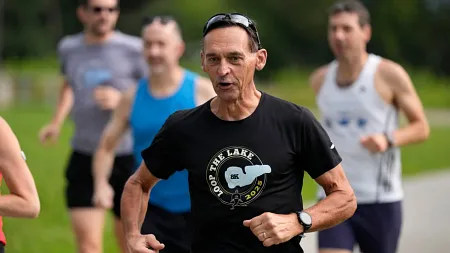
As rising temperatures begin to impact marathon race days and runners, organizers are moving race days to cooler days. The Associated Press spoke with Chris Minson, a University of Oregon College of Arts and Sciences professor who researches how people can adapt to extreme heat and other environmental conditions. He said the optimum temperature to run a marathon is about 50 degrees (10 C). As the temperature creeps into the upper 50s and 60s, the body has a tougher time supplying blood to muscles while also keeping the body cool.
Why do Oregon schools, cities constantly ask for property tax hikes?
Why do Oregon elections often include ballot measures asking for voters to OK property tax increases to fund resources ranging from schools to fire departments? State governments can't keep up with inflation and property tax reforms in the '90s make it possible to ask voters to step in. “I think it was poorly understood at the time either by the legislature or by the voters,” Joe Stone, professor emeritus of economics at College of Arts and Sciences, told the Salem Statesman Journal.
Get ready for summer stargazing season with 9 night-sky events
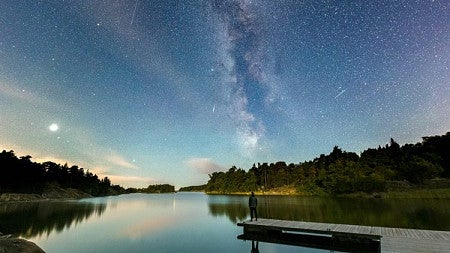
The summer brings long hot days, but if you're near Bend, Oregon, you can stargaze at Pine Mountain Observatory, which is affiliated with the College of Arts and Sciences. Reader's Digest pointed to the observatory as a spot to gaze between June 6 and 10, when Venus, Jupiter and Mercury will be above the western horizon.
The hidden Chinese influence in AI
An opinion article in the Wall Street Journal mentions research by College of Arts and Sciences sociologist Hannah Waight. Waight is a lead co-author on a team of seven researchers that included Purdue University, University of California San Diego, New York University and Princeton University that recently published its first peer-reviewed evidence that China’s state-controlled media has worked its way into the training data of AI chatbots that the world relies on.
May Day protests have long history in the Pacific Northwest
Protests were planned across the world on May 1 in honor of International Workers’ Day, also known as May Day, including in the Pacific Northwest. Steven Beda, an assistant professor of history at the College of Arts and Sciences, specializes in the history of labor in the Pacific Northwest. He said many in the labor movement came to believe that these men were convicted because they were immigrants, not because they committed a crime.
The folly of Trump taking a 'wrecking ball' to a crucial science advisory board
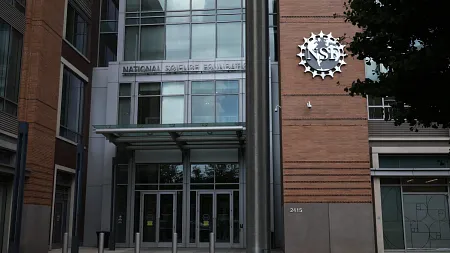
Mother Jones spoke with College of Arts and Sciences chemist and presidential chair Geraldine Richmond about the state of the National Science Foundation under the current White House administration. "This board is so important for being able to advise Congress as well as the president on issues that are so important to the country,” she said. Richmond was first appointed to the board by President Barack Obama and later by Trump during his first term.