CAS Connection - March 2026 Issue

March 2026

CAS Connection newsletter logo
Anthropology Associate Professor Alison Carter is an archeologist whose field work is focused on Cambodia

A lesson in looted artifacts 

When a certain email appeared in her inbox, anthropologist Alison Carter had no idea the impact it would have on her career plans.

By Leo Brown

Learn How Artifacts Get Back Home

Experiential Learning  |  Research & Innovation  |  Community Impact  |  Career Preparation  |  Teaching Excellence  |  21st Century Liberal Arts  |  Building Community  |  Good Vibes  |  CAS Spotlights  |  All Stories  |  Past Issues
 

Fabienne Moore, associate professor of French

21st Century Liberal Arts

Romance languages on the rise

Romance languages overhauled its curriculum to promote student success, and the results are undeniable.

By Violet Ashley

asia pop culture - student with plushy

Teaching Excellence

The pop culture of Hello Kitty

Professor Alisa Freedman examines how Japanese pop culture transforms global politics and people’s identities.

By Hannah Heckart

Documentary highlights the hallowed culture of lowriders

Good Vibes

The lowrider rides a little higher

Master’s student Alix Roederer-Morin didn’t mean to study car and lowriders culture but then made a documentary about it.

By Gretchen Scheck

NASA Artemis crew

Career Preparation

The effects of space on humans

Humans are going to the Moon for the first time in 50 years. What happens to them physically and how do they prepare?

By Henry Houston


Theatre arts Associate Teaching Professor Mary Jungels Goodyear makes multimedia collages for a stage production.

CAS Spotlight

A real scene stealer

Mary Jungels-Goodyear is a new associate professor in theatre arts teaching scenic design, but her skills and interests go well beyond the stage.

By Jenny Brooks
Get to Know Jungels-Goodyear

From the Media

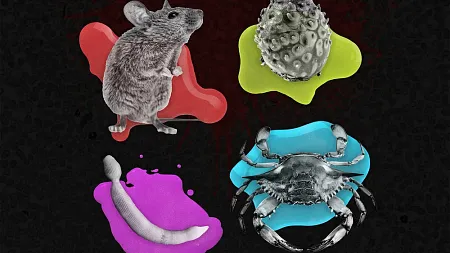
Humans are used to seeing red in blood — but red blood isn't universal in the animal kingdom. For some creatures, this vital fluid is purple; in others it’s yellow, green or even white. Smithsonian Magazine spoke with John Postlethwait, a developmental geneticist in the Department of Biology about Antarctic blackfin icefish of the family Channichthyida, the only known vertebrates that don’t make hemoglobin and do not have red blood cells. Their blood is a milky, translucent white. “They really are kind of ghostly," he said.
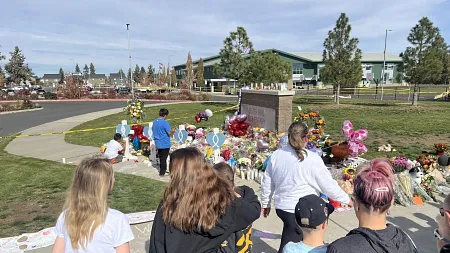
Nearly two weeks after the Oct. 15 shooting at a Bend-La Pine school, the shooter's absentee status from school raises questions about who should step in when kids don’t go to school and whether there are enough tools to pull them back to class. “There’s pretty strong evidence that rather than serving a deterring effect for these kids, justice system involvement is actually a promoter of delinquency,” CAS sociologist Stephanie Wiley told Bend Source Weekly.
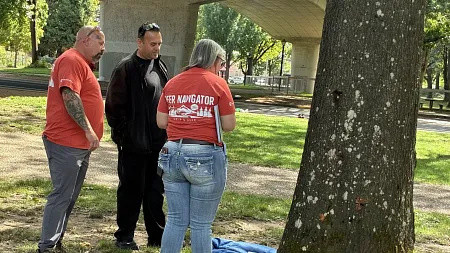
Eugene’s long-running mobile crisis service, CAHOOTS, shut down in the city more than a year-and-a-half ago. KLCC spoke with Rori Rohlfs, CAS data scientist and co-author of recent research about CAHOOTS. The nature of calls for welfare response changed and law enforcement responses changed, Rohlfs said. “After CAHOOTS stopped service, the arrest rate for those calls has doubled,” Rohlfs said.

All media news »

Find CAS on Instagram


UO College of Arts & Sciences (@uocas) • Instagram photos and videos

Connect with Us

Subscribe

CAS Connection is produced by the CAS Communications Department.

Got something to say? Send us your story ideas or contact us at CASConnection@uoregon.edu.

We know you don’t want to miss a single moment of CAS greatness. Stay plugged into the #CASCommunity by following us on your favorite channels.

Facebook icon Bluesky social media icon YouTube icon Instagram icon Linkedin icon