CAS Connection - Oct 2025 Issue

CAS Connection newsletter logo
Human Physiology intern, Ally Smith, on the track

Soaring from the sidelines

Thanks to human physiology internships, these students are getting hands-on lessons in medicine and helping Ducks' sports soar.

By Nicole Krueger and Henry Houston

Experiential Learning  |  Research & Innovation  |  Community Impact  |  Career Preparation  |  Teaching Excellence  |  21st Century Liberal Arts  |  Building Community  |  Good Vibes  |  CAS Spotlights  |  All Stories  |  Past Issues
 

Comics exhibition - Captain American by Jack Kirfy

Good Vibes

All hail the King of Comics

Only one comics artist has influenced so much of our culture and it’s not the name people know best.

By Jenny Brooks

chlorate antibiotic treatment comparison

Research & Innovation

CAS gives antibiotics a boost

Researchers have tested a new combination drug therapy that could dismantle difficult-to-treat bacteria.

By Leila Okahata

europa moon by nasa

Experiential Learning

NASA team ignites curiosity at UO

A next generation of scientists joined a meeting with 265 professionals guiding a NASA spacecraft.

By Henry Houston

an illustration collage of people's faces

Research & Innovation

How race shapes everyday life

A new book by Professor Jessica Vasquez-Tokos uncovers how race influences personal experiences.

By Grace Connolly

Computer Science Alumni Fedi Aniefuna giving keynote at Hackathon

CAS Spotlight

Computer science alum weaves together ambition and generosity to kickstart his career

When Fedi Aniefuna arrived at the UO, he still hadn’t decided whether he wanted to major in political science and go to law school, or study computer science and head straight into the workforce. Five years later, he’s beginning his second year as an engineer with Amazon Web Services after choosing math and computer science.

Learn Fedi’s Story

Where athletes maximize performance

The Oregon Performance Research Lab in the Department of Human Physiology is designed to drive significant scientific advancements in human performance and remove barriers for all individuals .

“When we first had the vision for this lab, it was not only understanding mechanisms that might be limiting human performance, but we also really wanted to translate that out into the community,” said Professor Brad Wilkins, founder and director of the Oregon Performance Research Lab. “Our community testing services program is really taking the research and translating that to people in the community that really want to improve their performance.”

The lab offers a number of fee-based testing services including threshold testing, VO2 max, hemoglobin mass and sweat testing.

Explore the Lab’s Research

Find CAS on Instagram


UO College of Arts & Sciences (@uocas) • Instagram photos and videos

CAS News

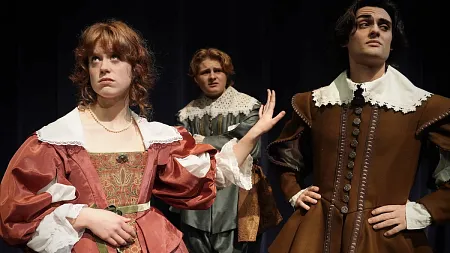
THEATRE ARTS — Love, mischief and mistaken intentions take center stage this winter as University Theatre presents “Much Ado About Nothing” by William Shakespeare. Directed by Jerry Ferraccio, the production marks the grand reopening of Robinson Theatre and runs Feb. 13, 14, 20, 21, 22, 27, 28 and March 1.
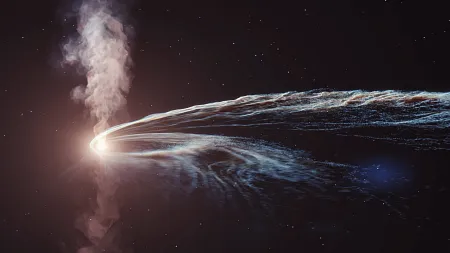
PHYSICS - A supermassive black hole with a case of cosmic indigestion has been burping out the remains of a shredded star for four years — and it’s still going strong, new research led by University of Oregon College of Arts and Sciences astrophysicist Yvette Cendes. Cendes and her team published findings about this one-of-kind black hole in the Feb. 5 issue of Astrophysical Journal Astrophysicists.
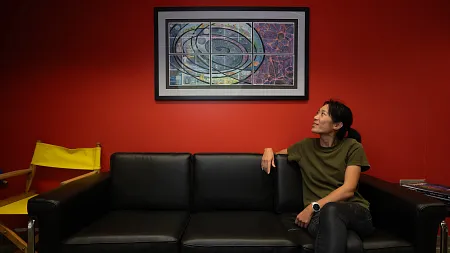
PHYSICS - Fascinated by the unexplored corners of the universe since childhood, physicist Tien-Tien Yu has made dark matter the pillar of her research career. In her quest to understand, she’s co-founded a major experiment in collaboration with physicists at other institutions, all of whom are trying try to bring light to the dark.

All news »


From the Media

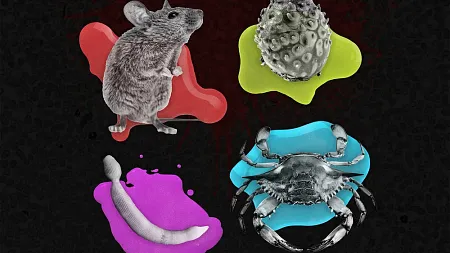
Humans are used to seeing red in blood — but red blood isn't universal in the animal kingdom. For some creatures, this vital fluid is purple; in others it’s yellow, green or even white. Smithsonian Magazine spoke with John Postlethwait, a developmental geneticist in the Department of Biology about Antarctic blackfin icefish of the family Channichthyida, the only known vertebrates that don’t make hemoglobin and do not have red blood cells. Their blood is a milky, translucent white. “They really are kind of ghostly," he said.
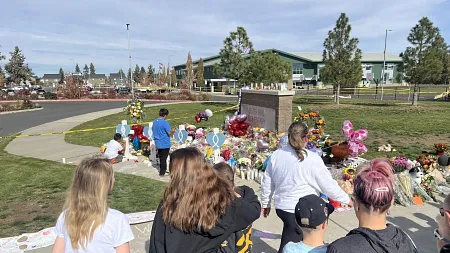
Nearly two weeks after the Oct. 15 shooting at a Bend-La Pine school, the shooter's absentee status from school raises questions about who should step in when kids don’t go to school and whether there are enough tools to pull them back to class. “There’s pretty strong evidence that rather than serving a deterring effect for these kids, justice system involvement is actually a promoter of delinquency,” CAS sociologist Stephanie Wiley told Bend Source Weekly.
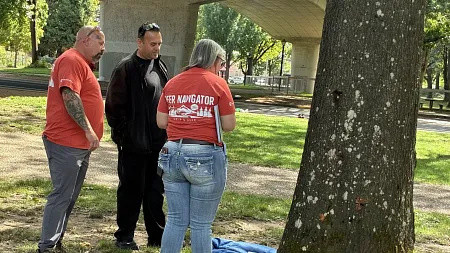
Eugene’s long-running mobile crisis service, CAHOOTS, shut down in the city more than a year-and-a-half ago. KLCC spoke with Rori Rohlfs, CAS data scientist and co-author of recent research about CAHOOTS. The nature of calls for welfare response changed and law enforcement responses changed, Rohlfs said. “After CAHOOTS stopped service, the arrest rate for those calls has doubled,” Rohlfs said.

All media news »

Connect with Us

Subscribe

CAS Connection is produced by the CAS Communications Department.

Got something to say? Send us your story ideas or contact us at CASConnection@uoregon.edu.

We know you don’t want to miss a single moment of CAS greatness. Stay plugged into the #CASCommunity by following us on your favorite channels.

Facebook icon YouTube icon Instagram icon Linkedin icon