
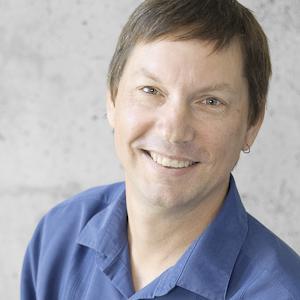
Mike Wehr
Biography
Dr. Wehr studies how local circuits in the cerebral cortex encode and transform sensory information. His laboratory uses mouse auditory cortex as a model system to investigate how cellular and network properties shape cortical responses to a continuous and temporally complex stream of sensory data. Research in his lab combines aspects of both cellular, systems, and theoretical neuroscience, by using the tools of molecular biology and cellular physiology to address systems-level questions. By using a variety of methods including optogenetics, in vivo whole-cell and single-unit electrophysiology, quantitative behavior, and imaging, the laboratory is trying to identify the cellular and synaptic mechanisms with which cortical circuits process auditory information, leading ultimately to our perceptual experiences of acoustic streams, such as music and speech.
Dr. Wehr is not currently accepting new graduate students.
To learn more about current research, and to download publications, please visit https://wehrlab.uoregon.edu/
Selected Publications:
Sattler Nicholas J., Wehr Michael, (2025) Cortex-wide spatiotemporal motifs of theta oscillations are coupled to freely moving behavior. Frontiers in Systems Neuroscience. https://doi.org/10.3389/fnsys.2025.1557096
Wright AL, Weible AP, Estes OB, Wehr M (2025) Ketamine does not rescue plaque load or gap detection in the 5XFAD mouse model of Alzheimer's disease. Frontiers in Aging Neuroscience. doi.org/10.3389/fnagi.2025.1505908
Weible AP, Wehr M (2022) Amyloid Pathology in the Central Auditory Pathway of 5XFAD Mice Appears First in Auditory Cortex. J Alzheimers Dis. 2022;89(4):1385-1402. doi: 10.3233/JAD-220538.
Weible AP, Yavorska I, Narayanan A. Wehr M (2022) A genetically identified population of layer 4 neurons in auditory cortex that contributes to pre-pulse inhibition of the acoustic startle response. Front Neural Circuits. 2022 Sep 8;16:972157. https://doi.org/10.3389/fncir.2022.972157.
Yavorska, I, Wehr, M (2021) Effects of Locomotion in Auditory Cortex Are Not Mediated by the VIP Network. Frontiers in Neural Circuits, 07 April 2021 https://doi.org/10.3389/fncir.2021.618881
Sattler Nicholas J., Wehr Michael, (2021) A Head-Mounted Multi-Camera System for Electrophysiology and Behavior in Freely-Moving Mice. Frontiers in Neuroscience. https://doi.org/10.3389/fnins.2020.592417
Weible A., Yavorska I., Kayal D., Duckler U., Wehr M. (2020) A layer 3→5 circuit in auditory cortex that contributes to pre-pulse inhibition of the acoustic startle response. Frontiers in Neural Circuits https://doi.org/10.3389/fncir.2020.553208
Weible, A., Stebritz, A., Wehr, M. (2020). 5XFAD mice show early onset gap encoding deficits in auditory cortex. Neurobiology of Aging doi.org/10.1016/j.neurobiolaging.2020.05.013. pdf
Weible, A., Yavorska, I., Wehr, M. (2020). A cortico-collicular amplification mechanism for gap detection. Cerebral Cortex Feb 14; doi.org/10.1093/cercor/hbz328.
O'Sullvan, C., Weible, A., Wehr, M. (2020.) Disruption of early or late epochs of auditory cortical activity impairs speech discrimination in mice. Frontiers in Neuroscience Jan 10; doi.org/10.3389/fnins.2019.01394.