

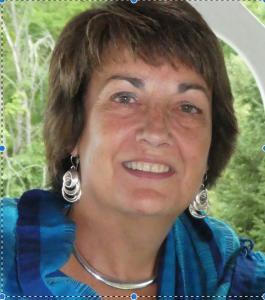
Lynn Stephen
Education
B.A., Carleton College (1979); Ph.D., Brandeis (1987)
Research Interests
rights claiming (human, indigenous, women’s)
intersectional analysis: gender; race, ethnicity, class
autonomy, nationalism, and globalization
testimony, time, social and historical memory
cultural and political relations of power
social movements
Mexican migration
Native peoples and indigenous epistemologies
transnational/transborder cultures, movements, communities
collaborative research
Primary research carried out in Mexico, El Salvador, Guatemala, Brazil, Chile, Paraguay and the U.S.
TEACHING AREAS
social theory; ethnographic methods; ethics and epistemologies; immigration, race and gender; Latino history and ethnography, oral history and documentary film-making; anthropology of chocolate; indigenous peoples; Latin American Studies
Research
Lynn Stephen is Philip H. Knight Chair, Distinguished Professor of Arts and Sciences, Professor of Anthropology, and a participating graduate faculty member in Indigenous, Race, and Ethnic Studies (IRES), Latinx Studies, Latin American Studies, Native American and Indigenous Studies (NAIS), and Women’s, Gender, and Sexuality Studies (WGSS). She founded the Center for Latino/a and Latin American Studies (CLLAS, http://cllas.uoregon.edu/) and served as its director for nine years (2007–2016). She chaired the Department of Anthropology from 2001 to 2004 and was a co-coordinator for the “Americas in a Globalized World” Big Idea Strategic Initiative at the University of Oregon from 2009 to 2011. She was president-elect and then president of the Latin American Studies Association (LASA) from June 1, 2018, to June 1, 2019, and served as past president from June 2019 to June 2020.
Lynn Stephen’s research and teaching illuminate processes of settler colonialism in the U.S. and Latin America, Indigenous knowledges, diasporas, and histories, and how race, gender, sexuality, and labor intersect historically and today.
Her current scholarly work focuses on immigration and asylum, violence against women and girls (particularly Indigenous women and girls), race, transborder communities, and Latinx and Mesoamerican Indigenous communities in Mexico, Guatemala, and diaspora in California and the Pacific Northwest. Her research explores access to justice for survivors of gendered violence, the impact of COVID-19 on farmworker health and well-being, and the mapping of Mesoamerican Indigenous languages and communities in diaspora in the U.S., along with the curing and caring knowledge they bring with them. She is currently the principal investigator (PI) for a collaborative Mellon grant supporting the project Invisible No More: Celebrating Mesoamerican Languages and Communities in Diaspora in Oregon.
Her work highlights Indigenous epistemologies and their theoretical and methodological relevance to advancing our knowledge of relationality among all species, as well as of territory and sovereignty. She has also produced groundbreaking analysis on gender, economic development, gendered violence, asylum and migration, globalization and social movements, Indigenous autonomy, and the history of Latinx communities spread across multiple borders through her concept of transborder communities and migrations. Empowering students, co-researchers, and the people she works with to put forward their own critical questions and answers and to tell their own stories is a top priority. She has a strong commitment to collaborative research projects that produce findings accessible to the wider public, and her work includes films such as Sad Happiness: Cinthya’s Transborder Journey (https://vimeo.com/154235511) and websites (see http://faceofoaxaca.uoregon.edu/introduction/) as well as scholarly publications. She was elected to the American Academy of Arts and Sciences in 2026.
A 2021 fellow of the American Association for the Advancement of Science, Stephen was cited for “distinguished contributions to the fields of anthropology, Latinx and Latin American Studies, particularly for her theorizing and ethnography of Indigenous women, Indigenous migrants, transborder communities, migration and social movements.”
Stephen has authored or edited 16 books, four special journal issues, and over 100 scholarly articles and chapters. She has a new manuscript under review titled The Ground We Carry: Mesoamerican Indigenous Peoples in Diaspora and Transborder Territories, which she completed as a fellow at the Stanford Humanities Center during the 2025–2026 academic year. Her newest books include Seeking Justice for Gendered Violence: Courts, Communities, and Care in Guatemala, co-authored with Erin Beck (Duke University Press, 2026); Indigenous Women and Violence: Feminist Activist Research in Heightened States of Injustice, edited by Lynn Stephen and Shannon Speed (University of Arizona Press, 2021); and Stories that Make History: Remembering Mexico through Elena Poniatowska’s Crónicas (Duke University Press, 2021). She co-edited a special issue with Laura Velasco Ortiz titled “Mesoamerican Indigenous Mobilities and Diasporas in Mexico and the United States” in Mexican Studies/Estudios Mexicanos 39 (1), Winter 2023.
Other books include We Are the Face of Oaxaca: Testimony and Social Movements (Duke University Press, 2013; published in Spanish in 2016), Otros Saberes: Collaborative Research on Indigenous and Afro-Descendent Cultural Politics (co-edited with Charles R. Hale, School for Advanced Research Press, 2013), and Transborder Lives: Indigenous Oaxacans in Mexico, California, and Oregon (Duke University Press, 2007). She has been awarded fellowships by the National Endowment for the Humanities, the Center for U.S.-Mexican Studies at the University of California, San Diego, the Radcliffe Institute for Advanced Study, and the Mexican Academy of Sciences, as well as grants for research and development from the Harry Frank Guggenheim Foundation, the National Science Foundation, the Wenner-Gren Foundation for Anthropological Research, the Ford Foundation, the U.S. Department of Education, and the Inter-American Foundation. She has also won national and international honors and book prizes from professional associations.
With colleagues and University of Oregon graduate and undergraduate students, Stephen built “Latino Roots,” a fifteen-panel traveling exhibit (http://cllas.uoregon.edu/research-action-projects/latino-roots/), a bilingual book, and 100 short documentaries that have reached more than 50,000 people in Oregon (see http://latinoroots.uoregon.edu/our-course/). The University of Oregon recognized her commitment to mentoring Latino, Native American, and other minority students to diversify the academy with the 2010 Martin Luther King Jr. Award for contributions to equity and diversity. As co-coordinator for the Otros Saberes (Other Knowledges) Project of the Latin American Studies Association, she raised funds for and mentored research teams of Afro-descendent and Indigenous community members and academic researchers in Brazil, Ecuador, Colombia, Mexico, Nicaragua, and Puerto Rico. She is currently a core committee member of the American Anthropological Association public education exhibit World on the Move: 100,000 Years of Human Migration.