

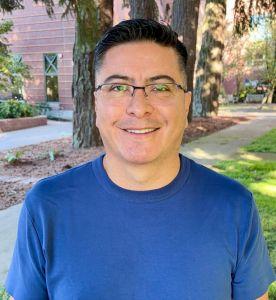
Byron Villacis Cruz
Biography
Byron Villacis is an Assistant Professor of Sociology at the University of Oregon. His research examines how organizations, experts, elites, and data infrastructures shape authoritative knowledge and institutional power. He combines relational quantitative analysis, archival research, interviews, and cross-national data to study official statistics, population measurement, economic expertise, elite formation, and anti-corruption governance across national and transnational settings.
His current research investigates the organization of expertise and elite power, the transformation of national statistical systems and census infrastructures, and the institutional production of economic and anti-corruption knowledge. He is the Country Coordinator for Ecuador in the World Elite Database (WED), an international collaborative research network studying the composition and structure of elites across countries.
Before entering academia, Byron Villacis served as Director General of Ecuador’s National Institute of Statistics and Censuses (INEC), where he directed the 2010 Population Census and oversaw more than 35 national surveys. He has also worked with international organizations on statistical capacity and measurement. Most recently, he has served as an international consultant to the United Nations Statistics Division (UNSD) and the United Nations Office on Drugs and Crime (UNODC), including as lead author of the 2026 Practical Guide to Measuring Corruption: Transforming National Anti-Corruption Priorities into Evidence-Based Action.
Villacis also co-founded the Latin American Observatory of Population Censuses (OLAC), an academia–civil society initiative promoting statistical literacy, transparency, and independent scrutiny of population censuses across Latin America. His public engagement connects his research on statistics and institutional authority with broader debates about data accountability and public knowledge.
Publications
- United Nations Statistics Division and United Nations Office on Drugs and Crime. 2026. Practical Guide to Measuring Corruption: Transforming National Anti-Corruption Priorities into Evidence-Based Action. Lead author: Byron Villacis.
- Villacis, Byron. 2026. “Governing Expertise through Anti-Corruption: How Governance Mechanisms Authorize Expertise and Ratify Power.” Frontiers in Political Science 8:1869966. doi:10.3389/fpos.2026.1869966.
- Villacis, Byron, and William Echeverria. 2025. “The Subordination of Economic Expertise: The Case of the Ecuadorian Dollarization.” Historical Social Research 50:256–299. doi:10.12759/HSR.50.2025.25.
- Villacis, Byron. 2025. “The Structure of the Anti-Corruption Field.” In A Comparative Historical Sociology of Corruption, edited by Marco Garrido, Marina Zaloznaya, and Nicholas Hoover Wilson, 231–251. Cambridge: Cambridge University Press. doi:10.1017/9781009669139.015.
- Villacis, Byron. 2024. “The Gender Composition of the Anti-Corruption Expertise.” In Corruption and Anti-Corruption Upside Down: New Perspectives from the Global South, edited by Fernanda Odilla and Konstantinos Tsimonis, 95–119. Cham: Palgrave Macmillan. doi:10.1007/978-3-031-66032-0_5.
- Villacis, Byron. 2024. “Population Censuses in Crisis: United States, Brazil, and Ecuador in Comparative Perspective.” In The Global Politics of Census Taking: Quantifying Populations, Institutional Autonomy, Innovation, edited by Walter Bartl, Christian Suter, and Alberto Veira-Ramos, 136–161. London: Routledge. doi:10.4324/9781003259749-8.
- Mendes Borges, Gabriel, Nicolás Sacco, and Byron Villacis. 2024. “The Latin American Observatory of Population Censuses: Increasing Statistical Literacy through an Academia–Civil Society Network.” In The Global Politics of Census Taking: Quantifying Populations, Institutional Autonomy, Innovation, edited by Walter Bartl, Christian Suter, and Alberto Veira-Ramos, 162–178. London: Routledge. doi:10.4324/9781003259749-9.
- Villacis, Byron, Alena Thiel, Daniel Capistrano, and Christyne Carvalho da Silva. 2022. “Statistical Innovation in the Global South: Mechanisms of Translation in Censuses of Brazil, Ecuador, Ghana and Sierra Leone.” Comparative Sociology 21(4):419–446. doi:10.1163/15691330-bja10060.
- Villacis, Byron. 2021. “Experticia Estadística en la Administración Pública Ecuatoriana: Mecanismos de Emergencia y Legitimación.” Íconos: Revista de Ciencias Sociales 71:81–102. doi:10.17141/iconos.71.2021.4841.
- Villacis, Byron, and David Vera. 2021. “Resiliencia Impugnada: Los Efectos del Terremoto de Manabí-Ecuador en la Predisposición a Participar en Espacios de Cooperación.” Revista de Estudios Latinoamericanos sobre Reducción del Riesgo de Desastres (REDER) 5(2):125–137. doi:10.55467/reder.v5i2.75.
- Thome, Debora, and Byron Villacis. 2019. “Gender Politics in Latin American Censuses: The Case of Brazil and Ecuador.” In Gender and Practice: Knowledge, Policy, Organizations, Advances in Gender Research28:119–140. Emerald Publishing. doi:10.1108/S1529-212620190000028007.
- Villacis, Byron, and Daniela Carrillo. 2013. “The Socioeconomic Paradox of Galapagos.” In Science and Conservation in the Galapagos Islands, edited by Stephen J. Walsh and Carlos F. Mena, 69–85. New York: Springer. doi:10.1007/978-1-4614-5794-7_4.
For updates visit: https://byronvillacis.org/research/