Curiosity, Discovery, Innovation
2025-26 Sponsored Research in the College of Arts and Sciences
Making the Most of Available Research Dollars
In 2025, federally funded research became a highly volatile commodity. In spring 2025, the federal government issued letters rescinding grant award money and changing criteria for previously awarded research dollars. Recipients of sponsored research grants joined national lawsuits and fought to keep the dollars they were awarded. But looking forward to the 2025-2026 grant application period, it was undeniable that researchers in CAS were going to see a drastic difference in available grant funds for their applications. Not only was funding uncertain, but applying for grants was suddenly different for each federal agency and not always clear. Even with these obstacles, researchers in CAS — and the grant support teams — forged on and still managed to secure more than $53 million for innovative and important research across the humanities, natural sciences and social sciences. The seven researchers featured below are just a sampling of the successfully funded sponsored research projects from the last year.
CAS Research in Action
Natural Sciences ► Social Sciences ► Humanities ► School of Computer and Data Sciences ►
The Role of Nuclear Factor Erythroid 2-related Factor 2 in Sarcopenic Obesity
PI: Wagner Dantas, Department of Human Physiology
Amount: $742,020
Sponsor: Department of Health and Human Services
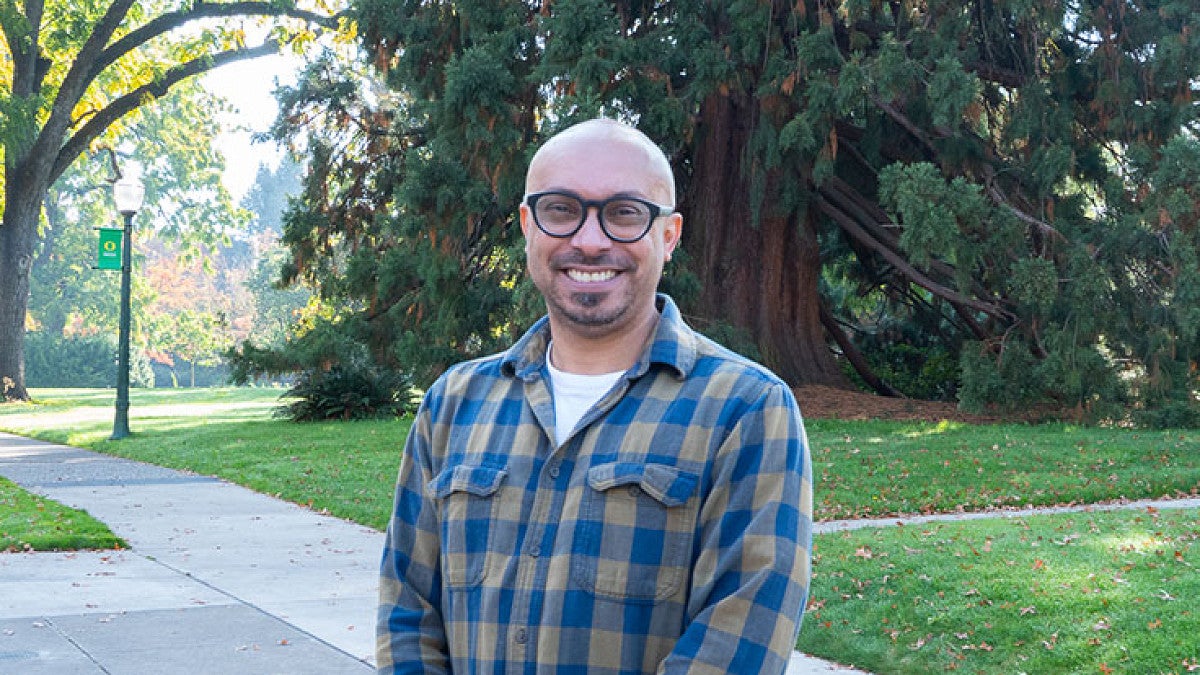
With the support of $742,020 from the Department of Health and Human Services, human physiologist Wagner Dantas, assistant professor of human physiology, is studying the impacts of sarcopenic obesity. For older adults, the combination of high body fat, low muscle mass and declining physical functions is the condition known as sarcopenic obesity. This condition poses a multitude of serious health risks such as type 2 diabetes, cardiovascular disease and a loss of balance that results in falls and causes physical disabilities. This also leads to less independence for older adults. The goal is to improve the quality of life in older adults by studying new therapeutics for those aging with sarcopenic obesity.
What Motivates General Educational Science Students? A Mixed Methods Approach
PI: Andrea Goering, Department of Physics
Amount: $350,000
Sponsor: National Science Foundation
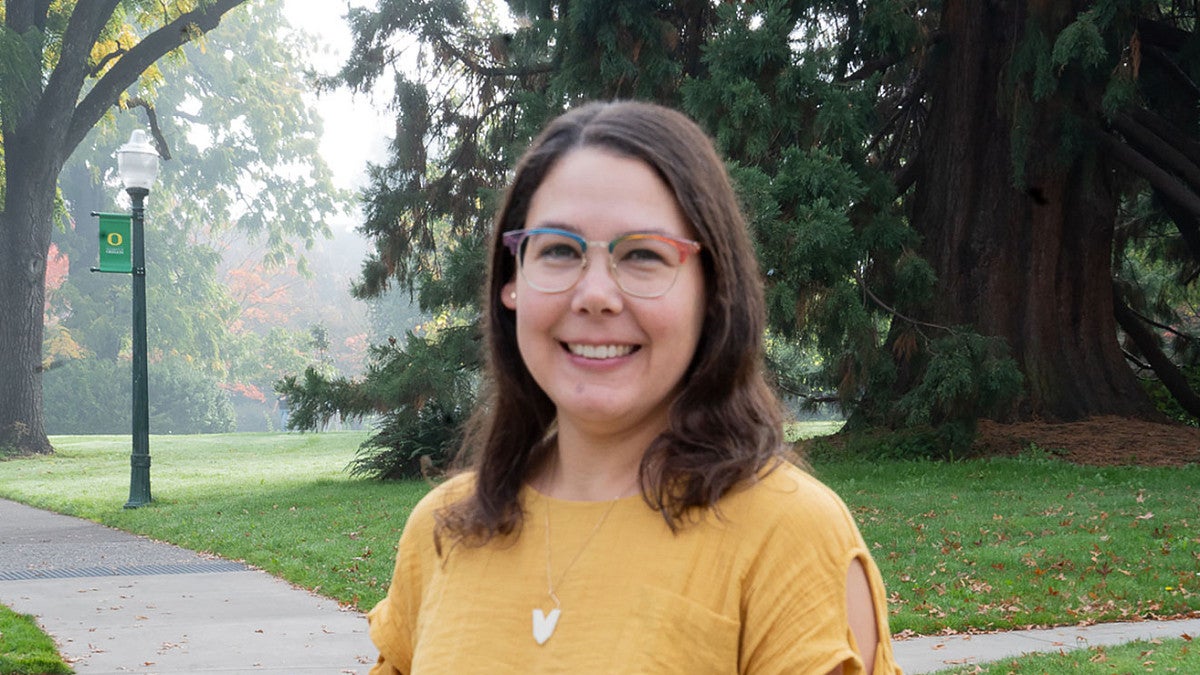
Physicist Andrea Goering received $350,000 from the National Science Foundation to study how two years’ worth of University of Oregon students (around 400-600) in a general education astronomy course are motivated for the course. General science courses such as earth sciences and astronomy are instrumental for a liberal arts education because they help students build skills in critical thinking. But some students may question the relevance of science courses in their professional development when not pursuing a science-based degree. The research study poses that understanding the mindset the students have during the course — from questions about the relevance of content to math-based anxiety — will help instructors engage and inspire students to be more open to STEM majors or find the value of STEM outside of non-STEM majors. Goering, an assistant teaching professor, hopes to apply this study on other general science courses in CAS, including those in physics, earth sciences and environmental studies.
Enabling Efficient Large Language Model Training via Performance, Energy and Reliability Co-optimizations
PI: Jieyeng Chen, Department of Computer Science
Amount: $533,628
Sponsor: National Science Foundation
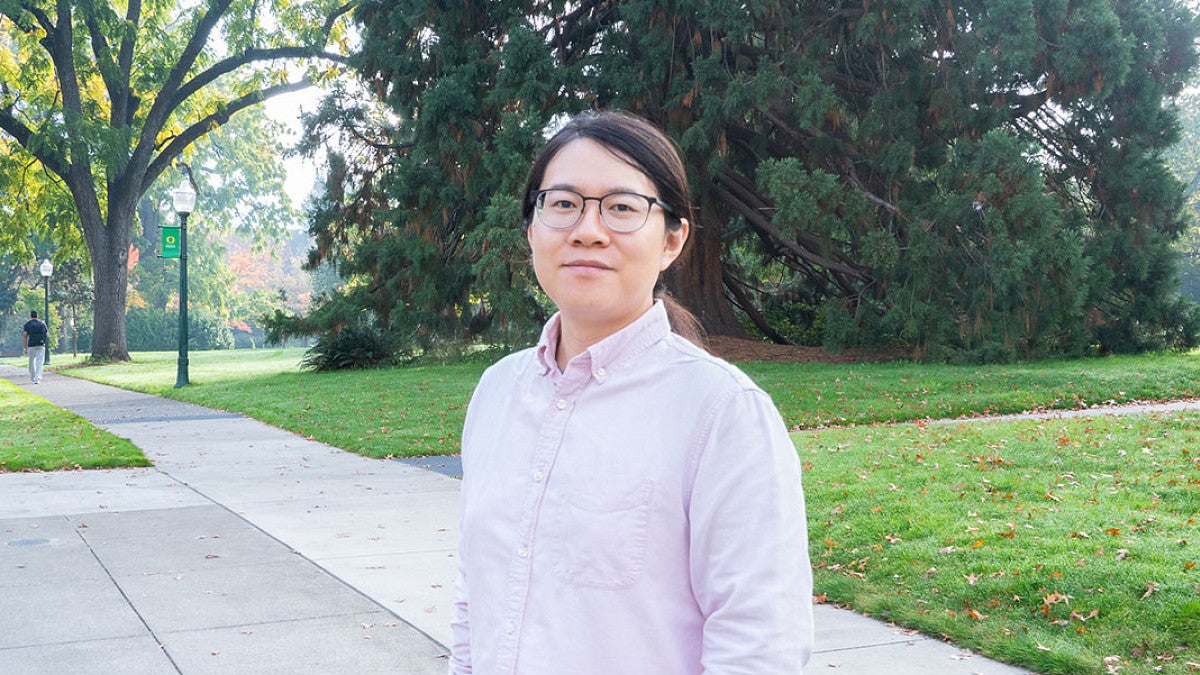
Jieyeng Chen, assistant professor of computer science, received a $533,628 research grant to study large language models (LLM). The rapid growth of LLMs has enabled major advances in artificial intelligence, including systems that assist with writing, coding, education and decision-making. However, training these models demands enormous computing resources. Although many optimization techniques have been proposed, the overall impact of these techniques on total training efficiency is currently unclear. This project addresses the growing gap between the unprecedented resource demands of LLM training and the limitations of existing optimization approaches. The research team is developing a systematic understanding of the trade-offs among existing strategies and will deliver a quantitative efficiency model that enables informed, cost-aware decision making for LLM training. In addition, the project advances optimization methods in under explored areas, particularly energy efficiency and reliability. The project also establishes an education program to support workforce development and expand participation in the AI industry.
Using the Past, Present and Future to Investigate the Effects of Global Change Agents on Tree Reproduction Across the Boreal Forest
PI: Melissa Lucash, Departments of Environmental Studies and Geography
Amount: $469,943
Sponsor: National Science Foundation

As climate change continues, the forests of North America are changing. Past research has explored tree growth in reaction to climate change but not as much is known about tree production, such as the impact on the quality and viability of seed production. A $469,943 award from the National Science Foundation is supporting Melissa Lucash, research assistant professor in environmental studies and geography, to work with researchers at University of Missouri-St. Louis and the University of Connecticut. They will study how conifers in the North American boreal forest are responding to the planet’s changing climate and improve predictions for future boreal forest composition. The award is also supporting the participating research groups to train future scientists in graduate and undergraduate programs.
Eelgrass Status, Ecological Interactions and Ecosystem Services in Southern Oregon
PI: Lillian Aoki, Department of Environmental Studies
Amount: $249,415
Sponsor: National Oceanic and Atmospheric Administration
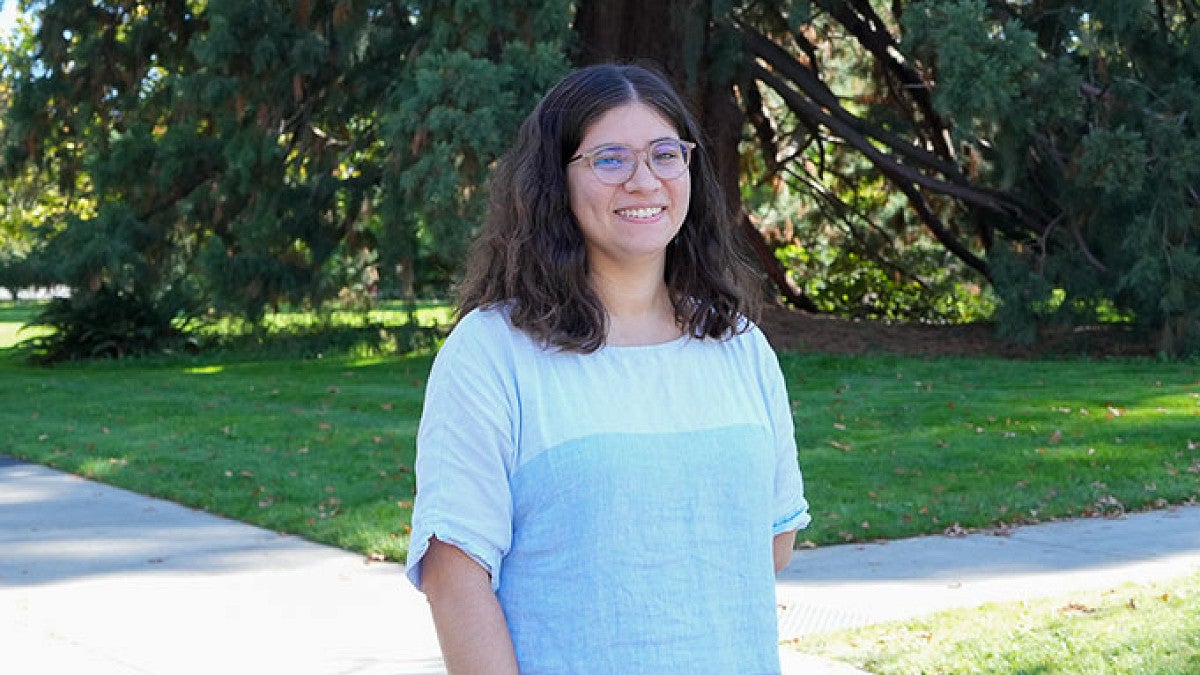
Through a $249,415 award from National Oceanic and Atmospheric Administration, Lilian Aoki, assistant professor of environmental studies, is studying and mapping where Oregon’s native eelgrass (Zostera marina) is on the Oregon coast. Seagrasses such as eelgrass are a vital part of marine ecosystems, serving as a habitat and food resource for numerous species that are important ecologically and culturally. In Oregon, eelgrass improves water quality, keeps the ocean from becoming too acidic and is economically critical for people whose livelihoods are on the coast, including operations such as fisheries. But seagrasses like eelgrass are in global decline, threatening these important ecosystem processes and the many services they provide. Despite its importance for conservation, the extent and health of eelgrass meadows are understudied in Oregon, especially along the southern coast. The award will also fund an environmental studies master’s student who will work with Aoki.
The Evolution of Non-concatenative Morphology
PI: Vsevolod Kapatsinski, Department of Linguistics
Amount: $443,996
Sponsor: European Research Council
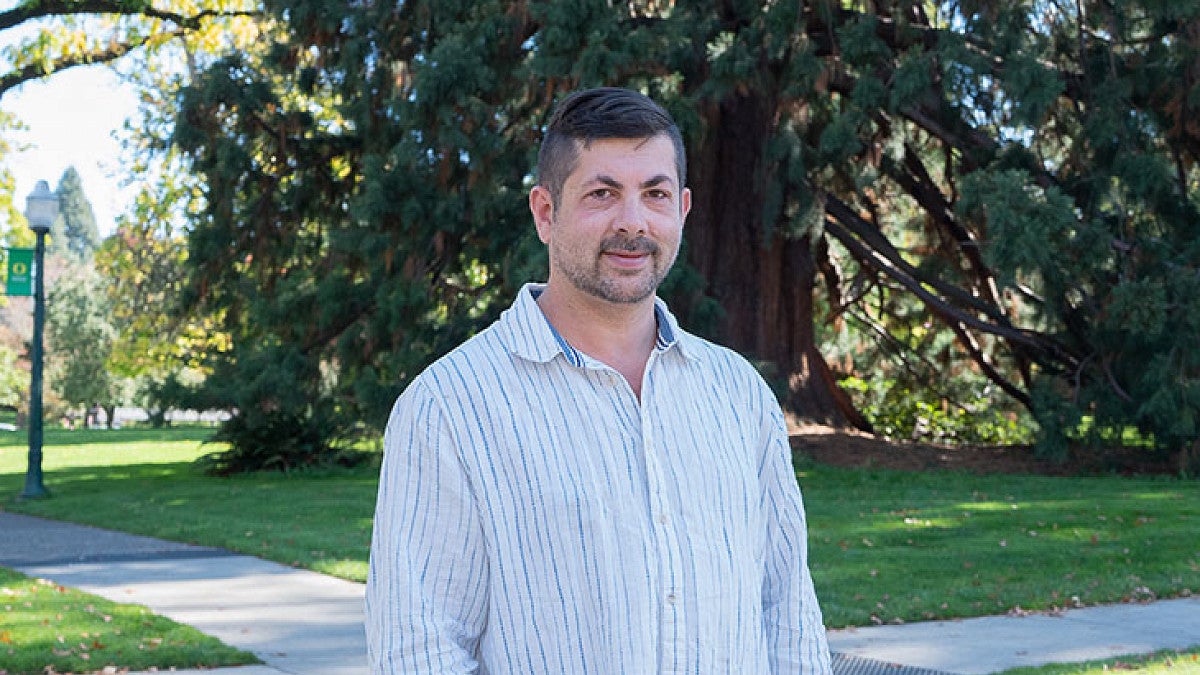
Languages tend to evolve in ways that make communication more efficient, but some languages contain complex patterns that appear to do the opposite. Vsevolod Kapatsinski, professor and head of the Department of Linguistics, is using a $443,996 research grant from the European Research Council to study how a specific set of language patterns arise, how people learn them and why they persist over time? Tackling those questions requires a large collaborative effort that brings together experimental, historical, computational and field linguists to investigate these systems from different perspectives. Kapatsinski was invited to contribute to the bigger project because of his expertise in miniature artificial language learning. Ultimately, the research could help answer a big question about human language: do patterns that appear inefficient or difficult to learn have underlying advantages that help explain why they develop and survive?
Linguistic and Cultural Documentation of Yabong (ybo)
PI: Andrey Drinfield, Department of Lingusitics
Amount: $222,487
Sponsor: Endangered Languages Documentation Programme
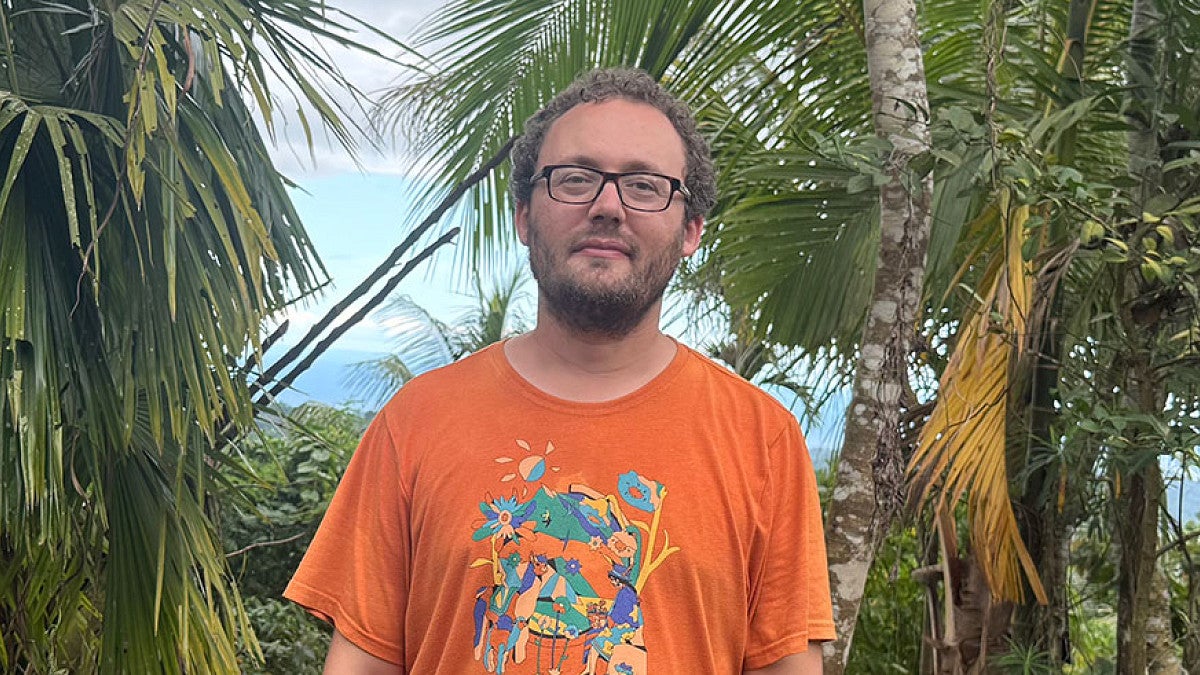
Postdoctoral linguistics researcher Andrey Drinfeld is documenting Yabong, one of the endangered and undocumented languages of Papua New Guinea, thanks to a $222,487 grant from the Endangered Language Documentation Programme, a charitable foundation that works to protect nature, preserve cultural heritage and promote open access to knowledge. The country of Papua New Guinea is home to around 800 languages, many of which remain undocumented and undescribed. Many of these languages are becoming endangered, since younger generations are increasingly using Tok Pisin (an English-based creole language that has become the lingua franca of Papua New Guinea). Drinfeld will spend a total of eight months in Papua New Guinea working with Yabong speakers to record and annotate naturalistic speech in the language. As part of the project, he will document aspects of Yabong culture, write a dictionary and provide grammar guidance of the language. Andrey’s work to preserve a record of Yabong before fluent speakers are lost will provide an important resource for the community while filling one of many gaps in linguists’ understanding of the languages of Papua New Guinea.