

Life in an Octopus's Garden
As the University of Oregon celebrates its 150th anniversary, we look to the next generation who are keeping the university's trailblazing ethos alive.
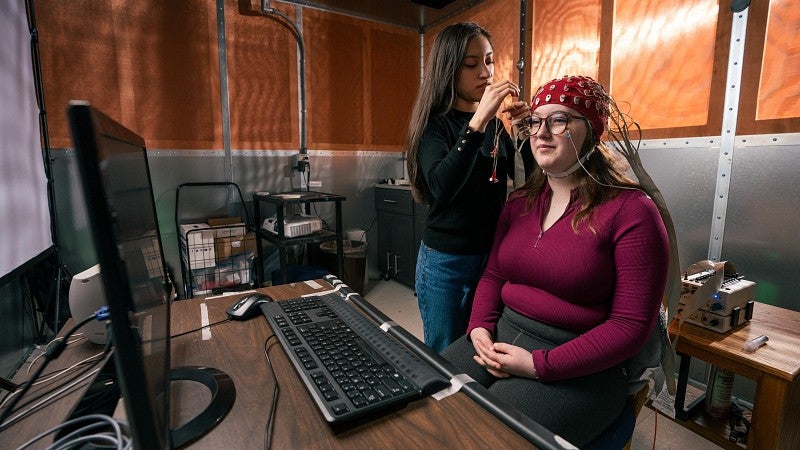
Meet Angelique Allen, a College of Arts and Sciences Ph.D candidate. Allen and her colleagues in Professor Cris Niell’s lab in the Institute of Neuroscience study how octopuses perceive their visual world and behave in response to what they see. Allen aspires to create a new scientific tool kit for studying these eight-armed creatures and other cephalopods.
News from CAS

All news »
We Love Our Supporters
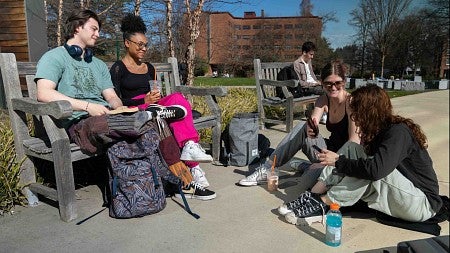
Gifts to the College of Arts and Sciences can help our students make the most of their college careers. To do this, CAS needs your support. Your contributions help us ensure that teaching, research, advising, mentoring, and support services are fully available to every student. Thank you!
The CAS Experience
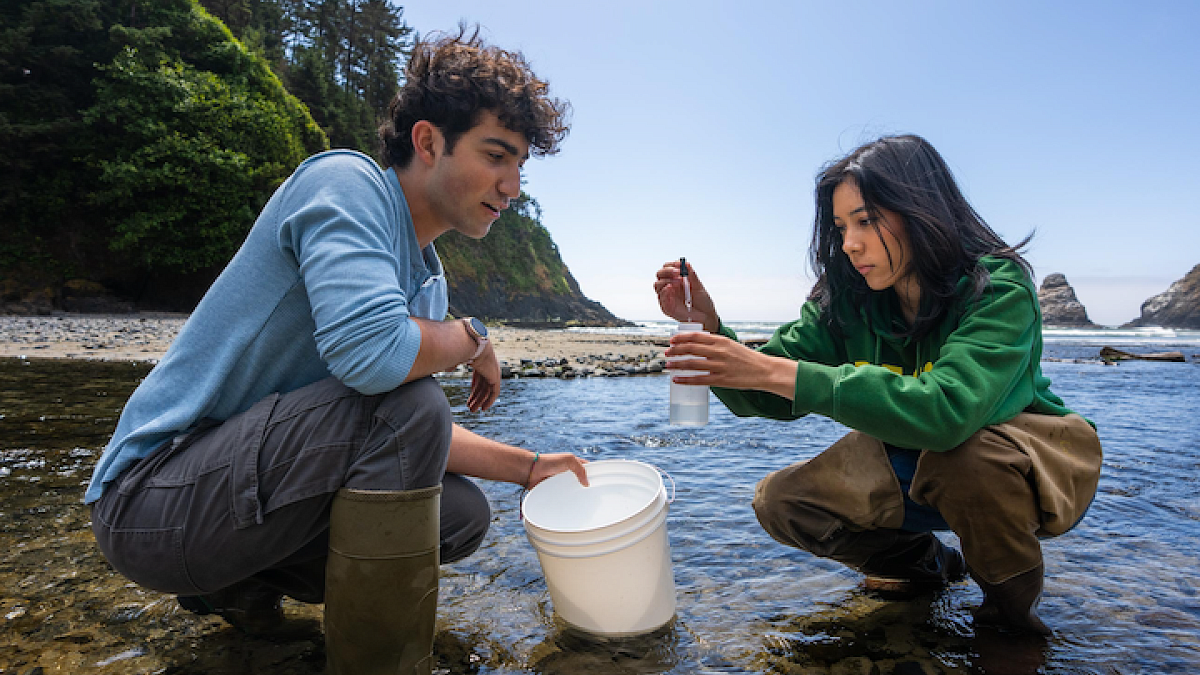
The College of Arts and Sciences experience is more than classroom lectures and lab experiments — it’s about putting ideas into action. Our students spend time in the classroom and then go out to the real world to apply their knowledge. A lifetime of curiosity, learning and engagement starts here at CAS.
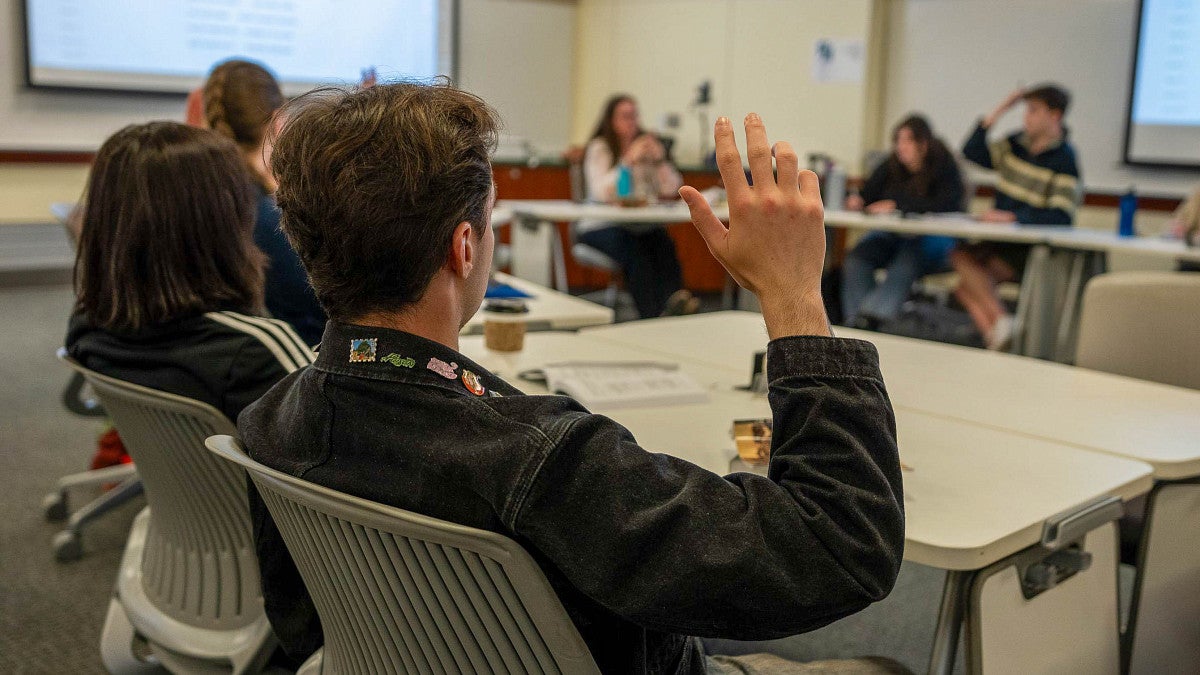
Undergraduate Studies
Small classes. Big ideas. More than half of the University of Oregon’s student population is pursuing a College of Arts and Sciences degree. But what you’ll find at CAS is an intimate liberal arts experience at an R1 institution. With a median class size of 23 students per classroom, CAS is an environment where you can work closely with faculty dedicated to research and mentorship. With more than 50 departments and programs, we have a program where you can transform curiosity into action.
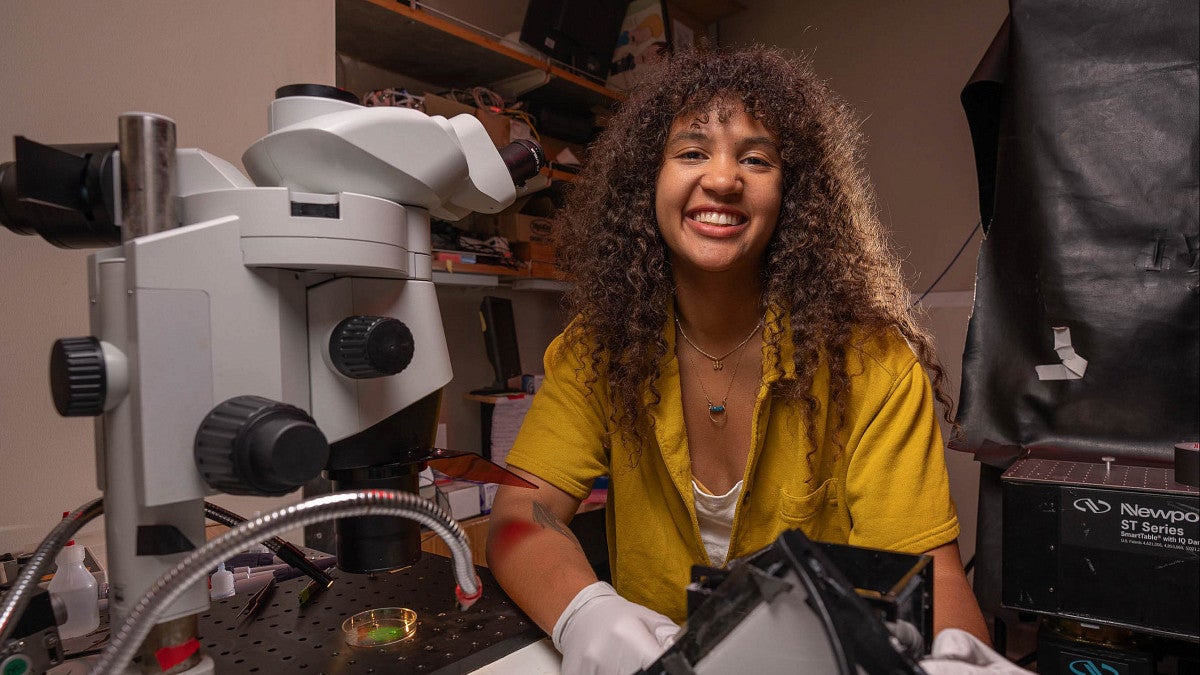
Graduate Studies
You’ve got ambition, and you’re ready for the next step: graduate school. Whether your goals are to expand scholarly knowledge or level up your professional capacities, CAS has more than 30 master’s programs and more than 20 doctoral programs, all span a range of disciplines. Our faculty members are here to support you on your academic journey, to guide you through research and advance your professional skills.
What’s Happening in CAS?
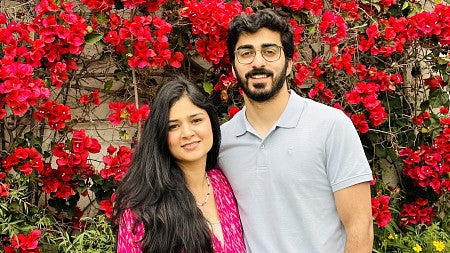
It turns out the sky isn't the limit for CAS physics alum Manju Bangalore (pictured). The physics alum is on her way to lead a research mission in space on a 2027 Virgin Galactic spaceflight. The October issue takes a look at what some of our researchers have received federal grants to study, faculty reviewing the hot topics of the 2026 midterm election, a CAS alumni couple working at Meta — and more.
Student Support Services
We’re here for you. As a CAS student, you have access to plentiful resources that can help you thrive inside and outside the classroom. Through Tykeson Advising, we provide comprehensive academic and career advising from the start of your journey. Learn about career preparation and get assistance in selecting the very best classes that resonate with you and offer the opportunity to grow. Connect with labs, libraries, IT and tutoring. Find your community on campus.
World-Class Faculty
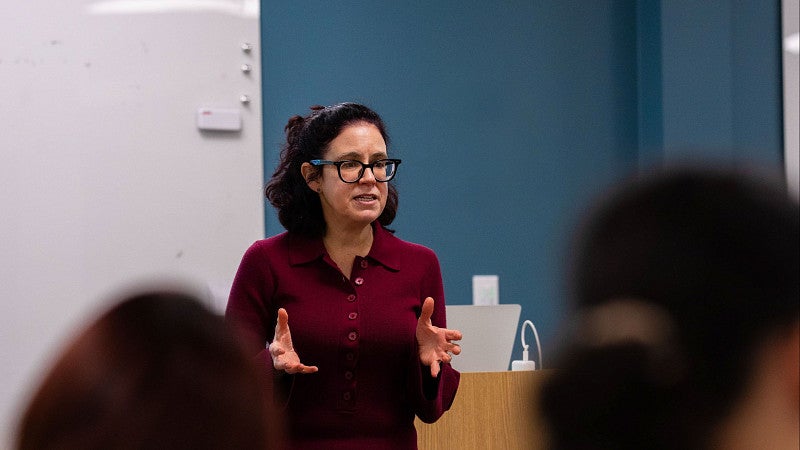
Our faculty go beyond the frontiers of science. Whether it’s green technology of tomorrow or tackling centuries-old philosophical questions, our College of Arts and Sciences faculty are in forward motion to tomorrow.
And they’re just as committed to the classroom. They’re here to help students like you discover their academic passion so you can become the next generation of professionals and scholars. They are here to coach you, inspire you and prepare you as you enter the professional world as critical thinkers and ethical global citizens.
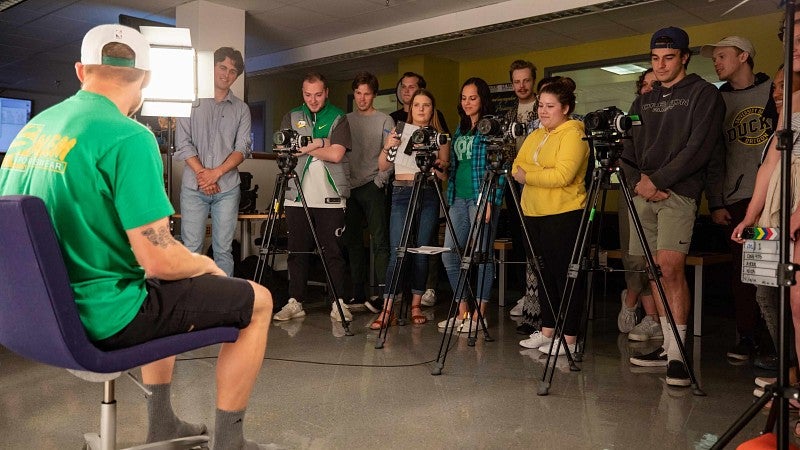

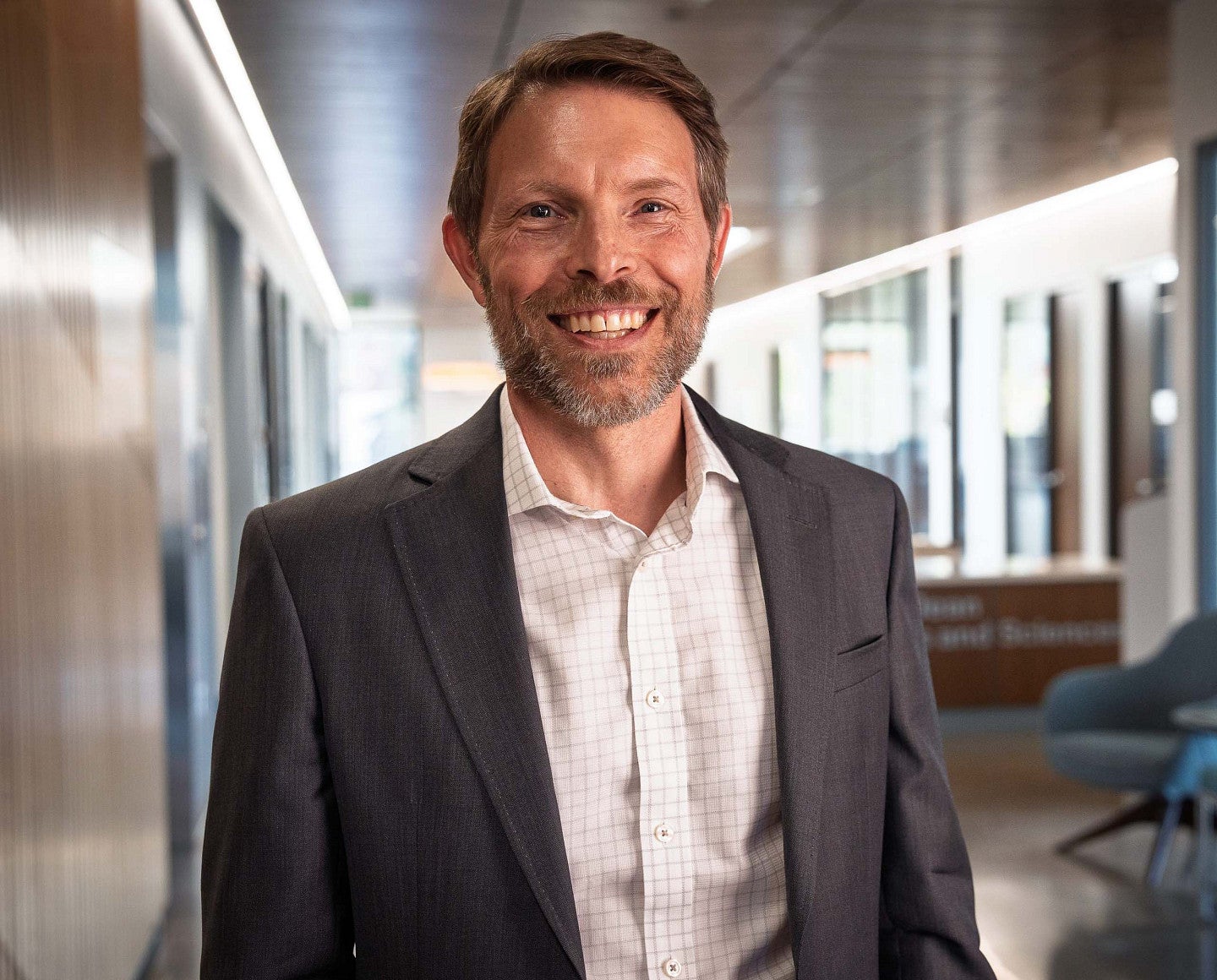
Meet Our Dean
In the College of Arts and Sciences (CAS), we are committed to excellence in research and teaching, student success, and diversity, equity, and belonging.
A liberal arts education—one that offers a breadth of intellectual approaches and perspectives and depth in a major discipline—is the foundation to a purposeful life as a life-long learner, engaged citizen, and leader. The skills you will learn here—from written and verbal communication to analytical and quantitative reasoning, to compassion and understanding—are those that employers seek and will open the door to a wealth of opportunities.
You will find more than 50 majors and a multitude of minors within CAS, and seemingly endless opportunities for personal exploration and discovery. Whether you are an incoming first-year student, a grad student or a transfer student, you can map an exciting future and be part of a fun, warm, engaged liberal arts community here. Come join us. And go Ducks!
Life at Oregon
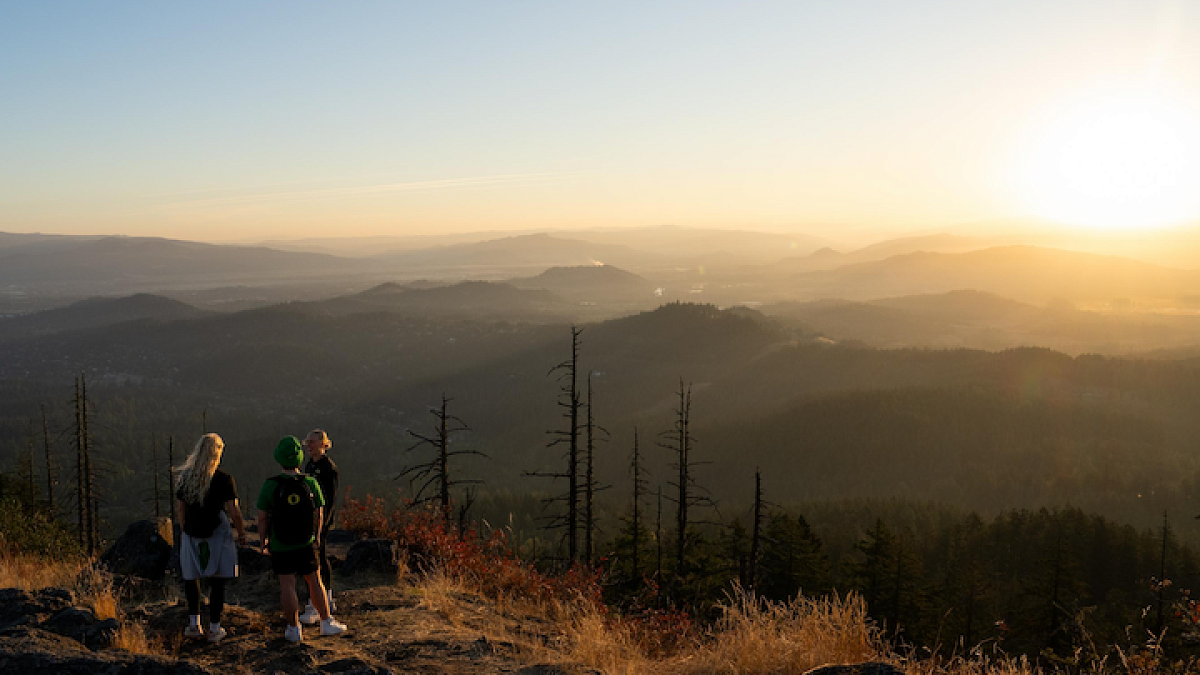
As a CAS student, your next home could be set in the lush Willamette Valley in the city of Eugene. Set between mountain ranges, two rivers and the Pacific Ocean, your adventure awaits. In between your studies, the UO is a place where you can forge lifetime friendships and connections with an exciting backdrop — whether that’s yelling “Go Ducks” during gameday at Autzen Stadium or a quiet hike in an old growth forest.
The College of Arts and Sciences includes:
Happening at CAS
Public Lands Justice
2:00 p.m.Oct
26
2:00–3:20 p.m.
Public Lands Justice: A Conversation with Midy Aponte-Vargas and Shandra Terry.
Aponte-Vargas is the founding Executive Director of the American Latino Heritage Fund at the National Park Foundation. Terry is the former USDA Forest Service National Communications and Engagement Lead for the National Equity and Engagement Office.
Co-sponsors: Just Futures Institute, Tierra Viva, Center for Environmental Futures, Oregon Humanities Center, the Barbara and Carlisle Moore Professor in English, Environmental Studies, English, Climate Justice league, Environmental Storytelling Lab, and FUSEE.
Cinema Studies Fall Term Coffee Hours
9:30 a.m.Join the Department of Cinema Studies for a cup of coffee or hot apple cider every week on Tuesdays during fall term!
Oct
27
9:30–11:30 a.m.
Join the Department of Cinema Studies for a cup of coffee or hot apple cider every week on Tuesdays during fall term!
Eco-Fascism Lecture Series: "Blood and Soil: Race, Gender and Food in Nazi Ideology"
4:00 p.m.Oct
27
4:00 p.m.
Environmental concerns—from nature conservation to air and water quality—are often associated with progressive politics. But under Fascisms past and present, ecological ideas have also animated authoritarian projects. This speaker series examines how dictatorships mobilize nature as both metaphor and material resource. As a metaphor, agrarianism evokes Fascism’s foundational mythos: the dictator will restore the country’s glorious national past. To live a rural, old-fashioned lifestyle was to be a more patriotic citizen. “Italy must be ruralized!” proclaimed Benito Mussolini in 1927. As a material resource, nature is often put to use in service of eugenics and racial hygiene.
Our speakers will examine the professional biographies of the scientists, industrialists, and entrepreneurs hired by Fascist regimes to determine the limits of biological possibility. Case studies from empire and the colonies will investigate the Fascist programs for experimental plant nurseries, animal breeding, and chemical trials. Rather than treating eco-fascism as a contradiction in terms, our speakers will situate it within longer histories of environmental planning, population management, and technocratic governance. They will explain how dictatorships use the tools of authoritarian governance to modify the environment in their pursuit of more Fascist futures.
Please join us for these illuminating discussions.
Talk details:
Blood and Soil: Race, Gender and Food in Nazi Ideology
Speaker: Prof. Alice Weinreb, Loyola University
This talk will explore the ways in which Hitler’s ‘blood and soil’ ideology raced and gendered the natural environment. According to Nazi ideology, ‘natural’ food was necessary for the maintenance of a pure and healthy Volk. Food thus was a way of constructing (and potentially of threatening) gender and racial identities. Weinreb’s talk will explore the ways in which nature was transformed into something to be consumed, which in turn naturalized Aryan supremacy and radical gender hierarchies. In Nazi Germany, racial and gender identity was performed through daily acts of food production (farming and cooking) and food consumption (shopping and eating). The talk also discusses the ramifications of linking the protection of the environment with the protection of racism and misogyny, discussing connections to contemporary far-right discourses linking environmental contamination, impure food, and racial and gender hierarchies.
For more information, please contact Prof. Diana Garvin, dgarvin@uoregon.edu.
Supported by: Department of Romance Languages, Italian Sector.
History Department Fall Term Coffee Hour
10:30 a.m.Oct
29
10:30–11:30 a.m.
Please join us Thursday mornings for a free cup of coffee, pastries, and conversation with your history department community! We’re excited to continue this tradition for our history undergraduate and graduate students, faculty, and staff. We hope to see you there!