
Preparing students for meaningful careers is a strategic priority in the College of Arts and Sciences (CAS). Through a new initiative led by Assistant Dean for Career Preparation Yifang Zhang, CAS is working with faculty and campus partners to integrate career preparation directly into curriculum.
This effort addresses a common disconnect between higher education and the workforce. A 2017 Gallup poll found that 96% of chief academic officers surveyed said graduates were prepared for the world of work, while only 11% of business leaders surveyed said graduates had the competencies and skills required for work.
CAS leaders say the goal is to ensure students develop key competencies for their careers, but also that they can articulate them to potential employers.
Connecting liberal arts learning to career skills
The competencies employers expect graduates to have include communication, critical thinking, teamwork and competence with technology. Industry work experience such as internships help students build these skills, but not all students have access to the same resources. For example, industry internships don’t always include a wage, which can make it unaffordable for some students.
One way to level the playing field is to make sure all students learn these competencies — which happen to be core to a liberal arts education — in the classroom and through on-campus activities.
“We’re focused on classrooms because career services for CAS students are optional,” said Jamie Mayhew Bufalino, associate dean for undergraduate education for CAS. "Many students, especially students from less privileged backgrounds, don’t take advantage of those resources. Bringing career prep into classrooms will reach all students.”
Tasked with meeting CAS’s career preparation goal, Zhang turned to the National Association of Colleges and Employers (NACE) to develop and implement the Career Leaders Program. The program focuses on providing tools and resources to reframe and elevate CAS’s existing effort in career preparation in classrooms.
CAS’s Career Leaders Program pilot, launched in fall 2025, includes 21 faculty and staff members from humanities, social and natural sciences, and representatives from campus partners that frequently interact with students, such as first-year interest groups and academic residential communities.
“In the College of Arts and Sciences, we’re aligned with the university’s goals, and we want to be a leader in solving this for students,” said Zhang. “As the largest school on campus, offering the most core education classes, we have an opportunity to have a significant impact on the foundation of students’ career preparation.”
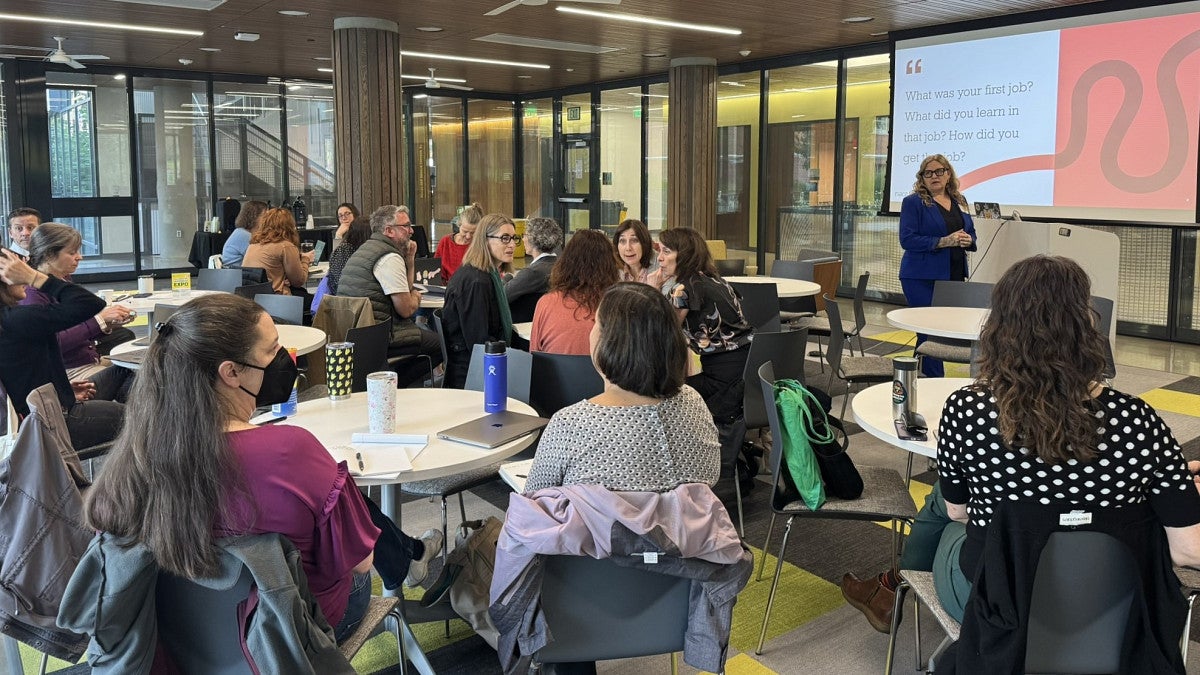
The year-long program uses a train-the-trainer model. Faculty and staff participants attended workshops led by experts from NACE, then developed and implemented career-focused learning activities within their courses and student programs. The results of the pilot will be evaluated at the end of the academic year.
Putting career preparation tactics into action
Professors Rachel DiNitto, Japanese literature, and Nicole Dudukovic, neuroscience, each incorporated a NACE competency assessment tool in one of their winter courses to be taken at the beginning and end of the course. Their goal was to encourage reflection and articulation of skills learned through these courses.
Political Science Professor Alison Gash incorporated the career preparation principles into her class, “Political Science: 106 Power Politics and Inequality.”
“I have a background in workforce development and believe that it is important for courses to provide some glimpse into how critical thinking translates into the specific spaces that students will occupy when they graduate,” said Gash.
In Gash’s class, students start with data collection through interviews with people in their communities about how they understand and define inequality. From there they do the work to analyze and problem-solve, offering a viable— and often creative — solution.
"We don't need to sacrifice attention to critical thinking and creativity in order to expose students to career-relevant assignments. Instead, we can show them that the work they will be doing in their professional lives requires exactly the critical thinking and analytical skills they are refining here in CAS,” said Gash. “In my experience students love the creative outlets that these projects provide, and the active data collection and analysis that these projects require.”
The Career Leaders Program invited those working with students in settings outside the classroom to participate in the training, too. Jessica Winders, associate director for academic residential research initiatives, facilitated practice office hours for first-year students. The intent was to reduce anxiety and uncertainty about attending office hours. Attending office hours develops professionalism and communication skills, both of which are skills expected by employers.
Evaluating the impact on students
At the end of the academic year, Zhang and her team will refine the materials and put them into a database for sharing. In the fall, a new class will become part of the Career Leaders Program, expanding the number of faculty integrating career preparation into their curriculum and growing a shared library of career preparation tools.
Considering the results of the NACE Job Outlook 2025 survey where 64.8% of respondents said they use skills-based hiring practices, career preparation is a necessary goal. Graduates prepared to demonstrate how their coursework provided them with useful career skills will find themselves at an advantage over fellow graduates who did not benefit from a focus on career preparation.
“CAS is uniquely positioned to lead this work,” Zhang said. “We teach the foundational courses that nearly every student takes, which means we can help thousands of students see the connection between what they learn here and the careers they pursue.”
— By Jenny Brooks, College of Arts and Sciences