
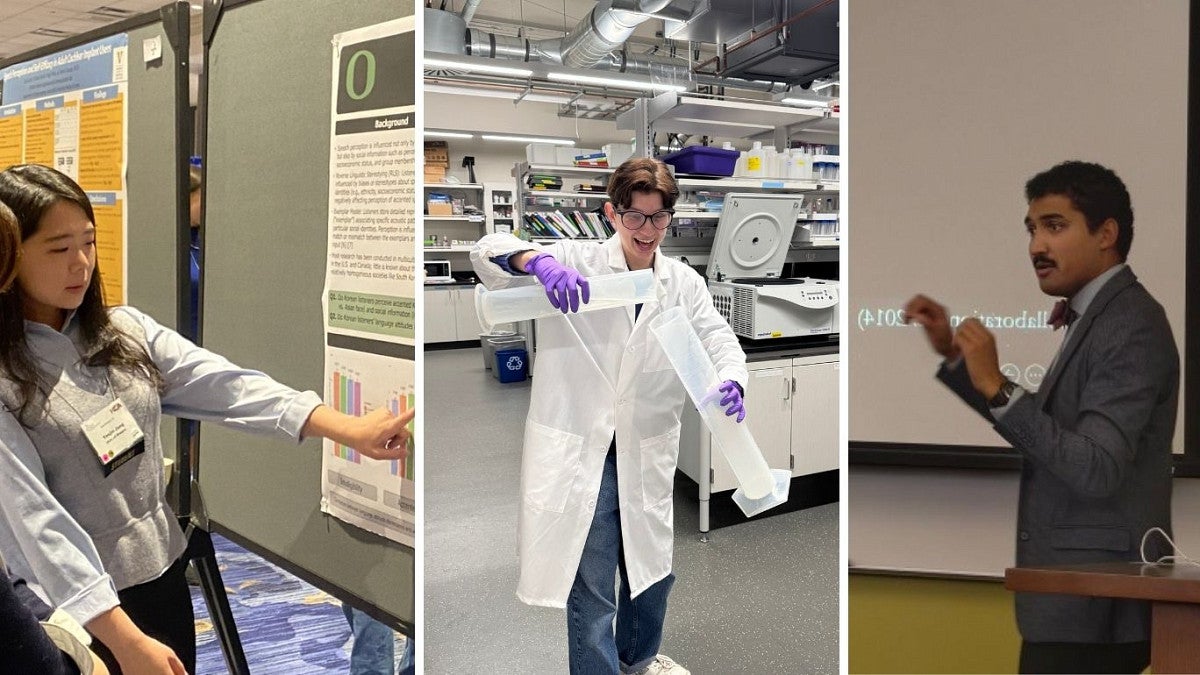
Whether it’s teaching a Korean language course or conducting research on Alzheimer’s disease, graduate students at the University of Oregon College of Arts and Sciences are playing a vital role in providing a liberal arts education and developing innovative research.
CAS is home to 1,295 graduate students, including 307 master’s and 959 PhD. With April 6-10 Graduate-Professional Student Appreciation Week, CAS reached out to some of its graduate students to hear about their experiences at the college.
The University of Oregon Division of Graduate Education is hosting a week of events that showcase the university’s appreciation of graduate students and all the work they do on campus. For more information, visit the schedule of events.
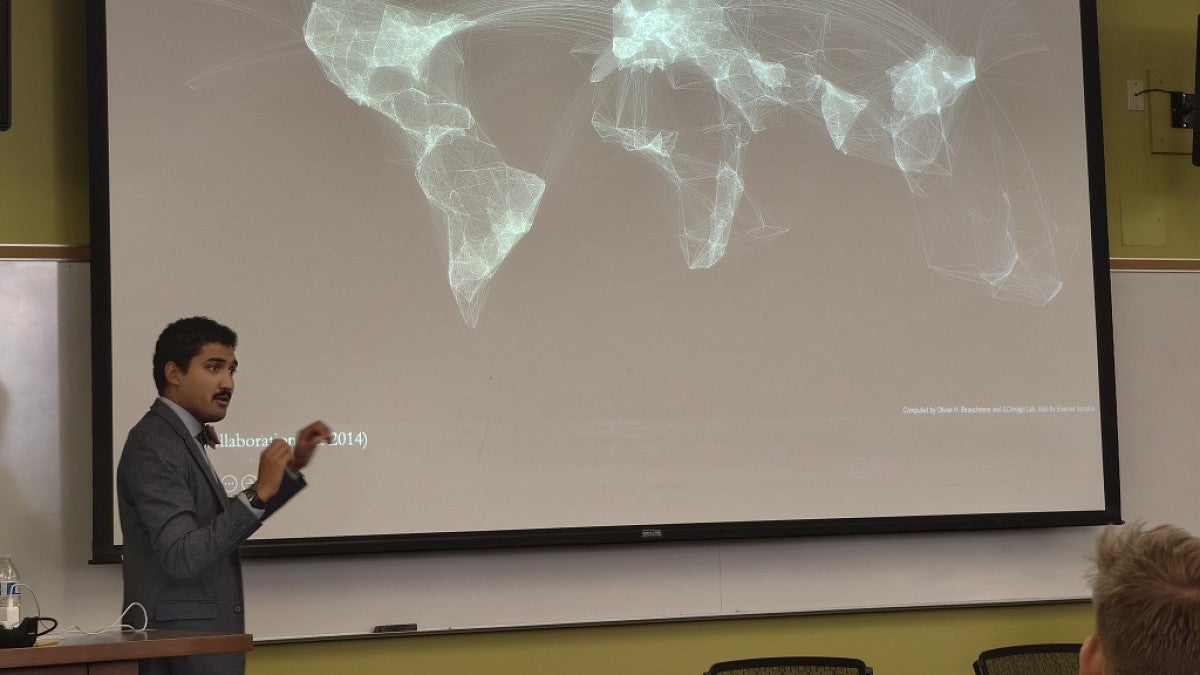
Cy Abbott, Geography PhD
Hobbies: playing banjo in the ‘old time’ folk music community, exploring the Pacific Northwest.
As Cy Abbott was wrapping up his undergraduate studies at the University of Chicago, a professor there recommended that he consider the University of Oregon and work with Alec Murphy, professor emeritus in the Department of Geography in CAS. The more Abbott researched CAS for graduate school, the clearer he said he saw it as a good fit.
As a PhD student, Abbott researches how maps and spatial display of data has a strong hold on policy makers and political experts. In addition to his research, he's earned praise for leading the course GEOG 202: Geography of Europe. Teaching the course is one of the most rewarding assignments he’s had as a graduate employee, he said. It’s a class that he said is popular for students who have been or planning to go to Europe, but he reminds all students to “be geographers wherever they are.”
Abbott has been active with the Graduate Teaching Fellows Federation and joined the UO Board of Trustees as the inaugural graduate student member of the board. Being involved in giving back to the UO community is driven by his value of "taking an active hand in making wherever you are more special."
And as a student, Abbott has marked his time at CAS by taking advantage of the different classroom spaces.
“The Yamada Language Center provided a chance for me to learn Turkish with a very small class size and a native Turkish-speaker from the Fulbright program,” Abbott said. “The Inside Out Prison Education Program afforded me the chance to take a cultural geography course within Oregon State Penitentiary with a class evenly split between ‘inside’ students in the prison and ‘outside’ students coming up from campus.”
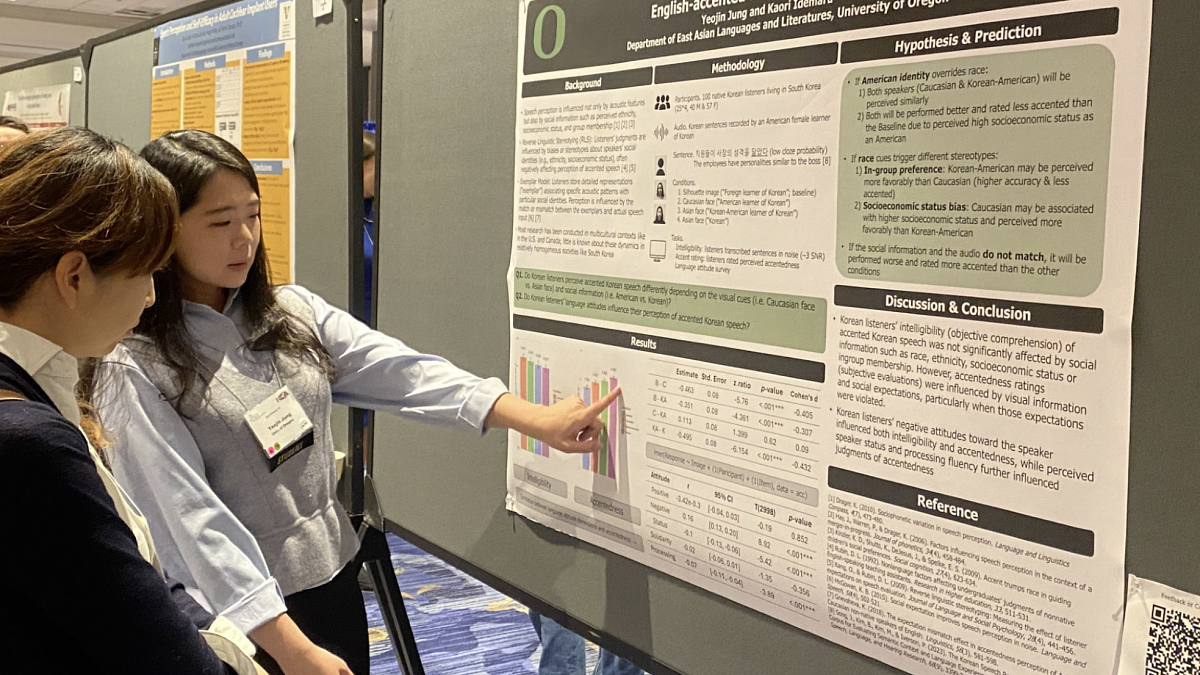
Yeojin Jung, East Asian Languages and Literatures PhD
Hobbies: cooking and learning different culinary cuisines, learning pottery at the UO Craft Center.
Yeojin Jung was drawn to the UO’s linguistics program for usage and functional linguistics. She was also excited to teach Korean as a graduate employee, as she said it’s not a common opportunity for graduate programs.
“What has made the UO and CAS meaningful to me are the opportunities to grow in multiple ways,” Jung said.
Jung’s research is focused on foreign-accented speech. Her dissertation examines how social information influences native listeners’ perception and evaluation of foreign accents. She’s also interested in how people process language in the mind and brain, and how second language users process a second language differently than native speakers.
Jung cites the East Asian Languages and Literatures and linguistics department coursework as a foundation that helped develop her research interests. Her dissertation topic emerged from two of those courses.
In addition to research, her Korean language teaching is what makes her time as a CAS graduate student remarkable.
“Teaching Korean as a GE has also been one of the most rewarding parts of my graduate experience,” Jung said. “It has brought me a great deal of joy and helped my stay grounded throughout the doctoral program.”
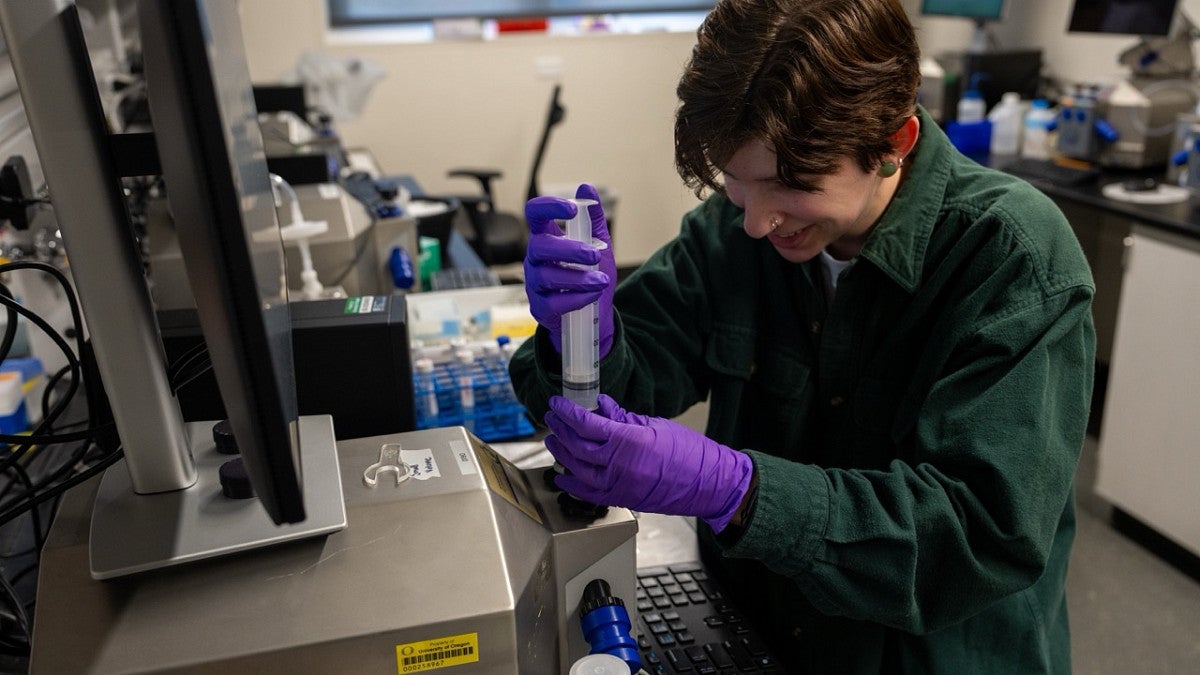
Sky Ferguson, Human Physiology PhD
Hobbies: Exploring the Pacific Northwest, checking out new coffee and tea shops in Eugene.
Coming from Nevada, Sky Ferguson was attracted to the University of Oregon College of Arts and Sciences for a few reasons. Of course, there’s the beauty of the Pacific Northwest and the outdoorsy nature of the Willamette Valley, but she was also drawn to be part of the groundbreaking research environment of the Department of Human Physiology.
Ferguson’s research focuses on how understanding the greatest genetic risk factor of Alzheimer’s disease — APOE4 — contributes to the health of the brain’s blood vessels and how these changes influence learning and memory.
Ferguson works in the Aging and Vascular Physiology Lab. The lab is led by Human Physiology Associate Professor Ashley Walker, an expert in how old age changes blood vessels. Researchers in the lab study how arteries and capillaries change with advancing age and how that leads to increased disease risk.
As a graduate student, Ferguson cites CAS as an invaluable resource for fellowships that have progressed toward her career goal.
“CAS and the UO have provided me ample opportunities to advance my research,” Ferguson said. “Whether its hosting events with colleagues to discuss innovative ideas over coffee or hosting seminars in different departments where we can build out networks and understand what research is taking place around the world.”