
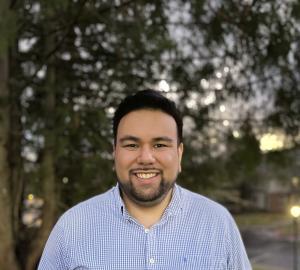
Sergio Loza
Biography
Dr. Sergio Loza is an Assistant Professor at the University of Oregon and Director of the Spanish Heritage Program. As a first-generation college graduate, the son of Mexican immigrants, and the grandson of two Bracero workers, Dr. Loza draws on his cultural heritage and lived experience as a U.S. Latino and heritage speaker of Spanish to inform both his scholarly research and his commitment to educational equity for underrepresented communities. His interdisciplinary, qualitative research spans sociolinguistics, heritage language education, critical language awareness, language ideologies and attitudes, sociolinguistic style, Spanish in the U.S., critical discourse analysis, and raciolinguistics. Central to his work is the pursuit of social justice and equity in Spanish language education, with a particular focus on improving educational outcomes for Latinx students. Dr. Loza’s research examines how dominant language ideologies influence the educational experiences of Latinx learners. His publications bridge theory and practice by offering strategies for integrating sociopolitical and ideological awareness into curriculum design and instructional practices. His academic mission is to dismantle ideological barriers faced by Latinx communities and to create transformative educational experiences for underrepresented learners.
His recent publications include a co-edited volume, Heritage Language Teaching: Critical Language Awareness Perspectives for Research and Pedagogy (2022), and a forthcoming co-authored book, Heritage Language Program Direction: Research into Practice, both with Routledge. In addition, Dr. Loza has contributed chapters and articles to leading journals such as Linguistics and Education, Studies in Second Language Acquisition, Critical Inquiry in Language Studies, Language Awareness, Language Testing, Languages, International Multilingual Research Journal, and Chiricú Journal: Latina/o Literatures, Arts, and Cultures.
Publications
BOOKS
Beaudrie, S. M. & Loza, S. (2023). Heritage language program direction: Research into practice. Routledge.
EDITED BOOKS
Schwartz, A., Magaña, D., Grammon, D. & Loza, S. (2025). Aquí se habla: Centering the local and personal in Spanish language education. De Gruyter Mouton.
Loza, S. & Beaudrie, S. M. (2022). Heritage language teaching: Critical language awareness perspectives for research and pedagogy. Routledge.
PEER REVIEWED CHAPTERS AND ARTICLES
Loza, (2025). Contributor conversation: Embodied/institutional knowledge. In A. Schwartz, D. Magaña, D. Grammon & S. Loza (Eds.), Aquí se habla: Centering the local and personal in Spanish language education (pp. 73-88). De Gruyter Mouton.
Flores, J. R., Gómez-Becerra, J. J., & Loza, S. (2025). A Chicana/o De-Colonial Praxis for the SHL classroom: Where colonial language meets decolonial pedagogy/epistemology. In A. Schwartz, D. Magaña, D. Grammon & S. Loza (Eds.), Aquí se habla: Centering the local and personal in Spanish language education (pp. 47-72). De Gruyter Mouton.
Loza, S. (2025). “Did you have some kind of blow to the head?”: Spanish heritage language learners, language ideologies and oral corrective feedback. Linguistics and Education. https://doi.org/10.1016/j.linged.2024.101380
Grammon, D. & Loza, S. (2024). Missed opportunities: Oral corrective feedback, heritage learners of Spanish, and study abroad in Peru. Heritage language journal, 21(1), 1-29. doi:10.1163/15507076-bja10025
Loza, S. (2024). Critical language awareness for all: Including receptive learners’ voice in the SHL classroom. In L. Padilla & R. Vana (Eds.), Representation, inclusion and social justice in world language teaching: Research and pedagogy for inclusive classrooms (pp. 1-15 pp.). Routledge.
Zalbidea, J., Pascual y Cabo, D., Loza, S. & Luque, A. (2023). Spanish Heritage Language Learners’ Emotions in the Classroom: Exploring the Impact of Teacher-focused Factors. Studies in second language acquisition, 45(4), 979-1003. https://doi.org/10.1017/S0272263123000025
Cerrón-Palomino, A., Loza, S. & Vana, R. (2023). What pre and post Arizonian statehood newspapers tell us about subject expression. Languages, 8(1), 1-15. http://dx.doi.org/10.3390/languages8010025
Loza, S., Padilla, L., & Vana, R. (2022). A critical analysis of Elite: Linguistic capital, ideologies, and marginalization. In A. Sánchez-Muñoz & J. Retis (Eds.), Communicative spaces in bilingual context: Discourses, synergies and counterflows in Spanish and English (pp. 129-142).Routledge.
Loza, S. (2022b). Unmasking ideologically charged oral CF practices in a Spanish mixed classroom: Teacher and SHL student perspectives. Languages, 7(3), 1-20. doi.org/10.3390/languages7030194
Loza, S. (2022a). Oral corrective feedback in the Spanish heritage language context: A critical perspective. In Beaudrie, S. & Loza, S. (2021). Heritage language teaching: Critical language awareness perspectives for research and pedagogy (pp. 119-137). Routledge.
Beaudrie, S. M. & Loza, S. (2022). The central role of critical language awareness in SHL education in the United States. In S. M. Beaudrie & S. Loza (Eds.). Heritage language teaching: Critical language awareness perspectives for research and pedagogy (pp. 3-18). Routledge.
Beaudrie, S. M. & Loza, S. (2021). Insights into SHL program direction: Student and program advocacy challenges in the face of ideological inequity. Language Awareness, 32(1), 39-57. https://doi.org/10.1080/09658416.2021.1949333
Beaudrie, S. M., Amezcua, A., & Loza, S. (2021). Critical language awareness in the heritage language classroom: Design, implementation, and evaluation of a curricular intervention. International Multilingual Research Journal, 15(1), 61-81. https://doi.org/10.1080/19313152.2020.1753931
Beaudrie, S. M. & Loza, S. (2020). Spanish heritage education in the Southwestern United States: Fighting restrictive policies toward language maintenance in Arizona. In F. Salgado-Robles & E. M. Lamboy (Eds.), Spanish across domains in the United States (pp. 25-46). Brill.
Loza, S. & Vana, R. (2020). Hola, my name is Carmen, who is this?- Language ideologies and dialect stylization in prank calls.” Critical Inquiry in Language Studies, 18(2), 133-152. https://doi.org/10.1080/15427587.2020.1796484
Beaudrie, S. M., Amezcua, A., & Loza, S. (2019). Critical heritage language awareness in the heritage context: Development and validation of a measurement questionnaire, Language Testing, 36(4), 573-594. https://doi.org/10.1177/02655322198442
Loza, S. (2017). Transgressing Standard Language Ideologies in the Spanish heritage language (SHL) Classroom. Chiricú Journal: Latina/o Literatures, Arts, and Cultures, 1(2), 56-77. https://doi.org/10.2979/chiricu.1.2.06
BOOK REVIEWS
Loza, S. & Ochoa, V. (2021). Adult Minority Language Learning: Motivation, Identity and Target Variety, by Colin J. Flynn, 2020 (Multilingual Matters). International Journal of Bilingual Education and Bilingualism.
SELECTED PRESENTATIONS
2024 Plenary speaker. Hispanic Linguistic Symposium. University of Nebraska, Omaha. https://www.unomaha.edu/foreign-languages/hispanic-linguistics-symposium/index.php
2024 Keynote speaker. Graduate Conference, Hispanic Literature and Linguistics Conference.Arizona State University, Tempe.
2022 Keynote speaker. 9th National Spanish as a Heritage Language Symposium, Florida State University. https://9nsshl2022.fsu.edu/keynote-speakers
2022 The critical turn in the field of Spanish heritage language education. Heritage Language Learning Symposium. The University of North Carolina Charlotte. https://heritagelanguagelearning.charlotte.edu/symposium