Natural Sciences News

PSYCHOLOGY - The College of Arts and Sciences’ Center on Brain Injury Research and Training (CBIRT) received a $1.3 million grant from Toyota Motor North America’s Way Forward Fund to develop, implement and evaluate support system aimed at helping students in San Antonio get the necessary family and school interventions for a successful recovery.
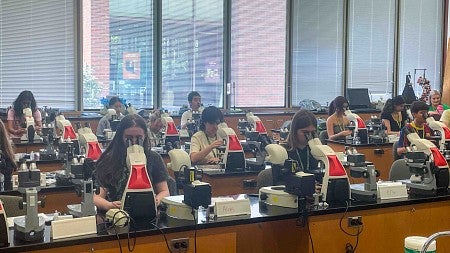
MARINE BIOLOGY - Marine biology students searched the Atlantic Ocean for rare organisms that thrive without sunlight. An upcoming IMAX film will document their journey—and, they hope, inspire a new generation of women scientists.
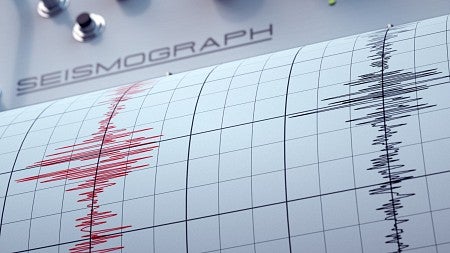
EARTH SCIENCES - What will happen if a massive earthquake reduces the Pacific Northwest to rubble? The nation’s first subduction zone earthquake hazards center, CRESCENT, brings together researchers and policymakers to help build resilience against the inevitable temblor—and increase diversity in the Earth sciences.
EARTH SCIENCES, DATA SCIENCE - Clark Honors College senior and data science major Lynette Wotruba took up data science three years into her college career. Today, she’s working with the Department of Earth Sciences to make information about the dangers of tsunamis accessible to communities along the Oregon coast.
EARTH SCIENCES - The Oregon Hazards Lab is a research lab within the UO’s Department of Earth Sciences, which is part of the College of Arts and Sciences. Its mission is to detect, monitor and mitigate natural and human-caused hazards, such as earthquakes and wildfires.
CHEMISTRY AND BIOCHEMISTRY - Adding a squirt of water to coffee beans before grinding reduces static electric charge on the coffee grounds, according to new research from Associate Professor Christopher Hendon.
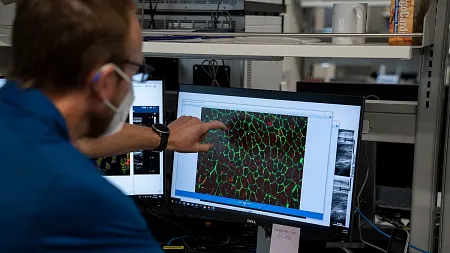
BIOLOGY - A UO study, recently published in the American Journal of Physiology-Gastrointestinal and Liver Physiology, applies the latest molecular and genetic tools to construct a step-by-step map of how colon tissue builds itself, using mice as a model organism.
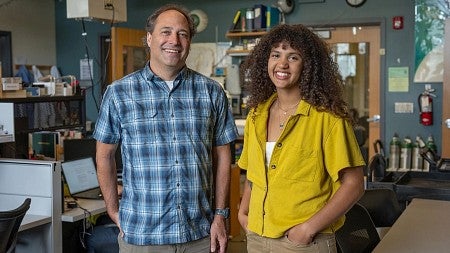
BIOLOGY - University of Oregon postdoctoral fellow Caitlin Kowalski is one of five women to win the 2023 L’Oréal USA For Women in Science fellowship for her work on the fungi genus Malassezia. Kowalski is a mentor for two UO undergraduate students.
BIOLOGY - New University of Oregon research in tiny worms is unpacking some of the ways that reproductive cells get used differently to make sperm and eggs. A team from the lab of UO biologist Diana Libuda in the College of Arts and Sciences reports their findings in a paper published Oct. 5 in the journal eLife.
GEOGRAPHY, HUMAN PHYSIOLOGY, NEUROSCIENCE - Three current UO students have been selected as finalists for the prestigious Rhodes scholarship, the oldest international fellowship award in the world.
BIOLOGY, CINEMA STUDIES, ENVIRONMENTAL SCIENCE, GEOGRAPHY - From animals to adhesives to DJ food stamp, students in First-year Interest Groups follow their fascinations and create community.
ECONOMICS, INDIGENOUS, RACE AND ETHNIC STUDIES, GENERAL SOCIAL SCIENCES, PSYCHOLOGY, SPANISH - For Latinx History Month, read about some of the alumni from the College of Arts and Sciences and how they're making an impact in their community.
HUMAN PHYSIOLOGY - Thanks to an anonymous donor, the Department of Human Physiology in the UO’s College of Arts and Sciences now has a director of internships and has so far provided stipends for 61 undergraduate students to get paid, hands-on experience. 
EARTH SCIENCES - Research led by Rebecca Dorsey, an Earth sciences professor in the College of Arts and Sciences, led research that reveals the dynamics of seismically active faults on either side of the Strait of Messina and how they interact to create a narrow marine passage filled with geologic hazards.
Beginning just after 8 a.m., the moon will slowly pass between the sun and the earth. And for a few minutes starting at 9:16 a.m., it will almost overlap with the sun in the sky, leaving a glowing “ring of fire” around the dark void of the moon.